Last updated: October 12, 2026
- Which Medicube Zero Pore product do you have?
- Understanding the two sides
- Where the pads go in your routine
- How often to use them
- How often should you use Medicube Zero Pore Pads? A week-by-week schedule
- What time of day should you use Medicube pore pads?
- Which comes first: Medicube pore pad, toner, or serum?
- Can you use Medicube Zero Pore Pad with retinol or tretinoin?
- Pairing with other actives
- How to use Medicube Zero Pore Pads step by step
- How to stop your Medicube pore pad jar from leaking or drying out
- Getting the most from each pad
- Medicube pore pad routines by skin type
- Do Medicube pore pads shrink pores or remove blackheads?
- Signs of over-exfoliation and how to recover
- Common mistakes with Medicube Zero Pore Pads
- Who should avoid them
- Patch testing and when to talk to a dermatologist
- How we put this guide together
- Quick scenario guide: which setup fits you?
- Medicube pad FAQ: more questions people ask
- FAQ
- Bottom line
Medicube Zero Pore Pads are dual-textured toner pads soaked in a mild exfoliating solution, marketed for smoother texture and less visible pores. Because they combine exfoliation with the convenience of a pad, it is tempting to swipe them twice a day and layer everything else on top. That is where most irritation stories start. This guide is about using them well: when, how often, which side to use, and how to fit them around the rest of your routine without overdoing exfoliation.
Updated October 2026 — Short answer to how often to use Medicube Zero Pore Pad: most people do best with 2 to 3 evenings a week for the first month, then up to once a day if their skin stays comfortable. Medicube’s own directions for the standard Zero Pore Pad 2.0 allow use up to twice a day, but that is a ceiling for resilient skin, not a starting point. If you are wondering how to use the Medicube Zero Pore Pad step by step, it goes right after cleansing on dry skin, textured side first, then the smooth side, with no rinsing afterward.
Top 3 picks to know by name: medicube Zero Pore Pad 2.0 (the standard AHA and BHA toner pad), medicube Zero Pore Pad Mild 2.0 (the gentler PHA version for sensitive or dry skin), and medicube Zero Pore Peel Pads 8EA (a small physical buffing pad for face and body, used once or twice a week). Which one is in your hands changes the answer to almost every question below, so check the label first.
This guide is based on the brand’s published directions, ingredient lists on retailer and maker pages, and common dermatology guidance on exfoliating acids. It is general education, not medical advice. If you have a skin condition or use prescription products, ask a dermatologist before adding an exfoliating pad.
Quick answer: Our top pick in 2026 is the medicube Zero Pore Pad 2.0 — our #1 rated choice. See the full ranked comparison, alternatives and buying advice below.
Which Medicube Zero Pore product do you have?
“Medicube Zero Pore pads” is used for three different products, and mixing them up is the most common reason people get conflicting advice online. The frequency that suits one can be far too much for another. Formulas are updated from time to time, so treat the figures below as a snapshot and confirm them against the carton or jar you actually own.
| Product | Format | Exfoliating approach | Typical starting frequency | Best for |
|---|---|---|---|---|
| medicube Zero Pore Pad 2.0 | 70 dual-textured toner pads in a jar | Lactic acid (AHA) about 4.5% and salicylic acid (BHA) about 0.45% per the brand’s listing | 2 to 3 evenings a week | Oily, combination, congested, resilient skin |
| medicube Zero Pore Pad Mild 2.0 | 70 dual-textured toner pads in a jar | PHA (gluconolactone), no AHA or BHA, with madecassoside | 3 to 4 evenings a week | Dry, sensitive, or first-time exfoliant users |
| medicube Zero Pore Peel Pads 8EA | 8 single-use buffing pads | Mostly physical buffing, a quick wipe-and-smooth step | Once or twice a week, per the brand | Rough patches on the face, elbows, heels, back |
medicube Zero Pore Pad 2.0 — Best for oily and congested skin

medicube Toner Pads Zero Pore Pad 2.0 for Exfoliation and Pore Care
Included for 'How to Use Medicube Zero Pore Pads in Your Routine' as a representative home product in this roundup; selection reflects the product set returned for this topic.
View on Amazon- 70 pads in one jar, with tweezers included for hygiene
- Dual-textured: an embossed side for light buffing and a smooth side for a gentler pass
- Brand-listed acids: about 4.5% lactic acid (AHA) and about 0.45% salicylic acid (BHA)
- Includes centella asiatica extract and panthenol in the soak
- Contains citrus-derived ingredients, so check the label if you react to fragrance components
Pros: one step covers toner and exfoliation; easy to dose because each pad is pre-soaked; the textured side gives a visible “smooth” feel at the T-zone.
Cons: two exfoliating acids in one pad make it easy to overdo; scent and citrus-derived ingredients may not suit very reactive skin.
Skip it if… your barrier is already irritated, you have active eczema or rosacea flares, or you use a prescription retinoid and have not asked your prescriber about adding an acid.
medicube Zero Pore Pad Mild 2.0 — Best for sensitive or dry skin

medicube Toner Pads Zero Pore Pad Mild 2.0, Gentle Exfoliation & Pore Care
Included for 'How to Use Medicube Zero Pore Pads in Your Routine' as a representative home product in this roundup; selection reflects the product set returned for this topic.
View on Amazon- 70 dual-textured pads, same jar format as the standard version
- Uses a PHA (gluconolactone) rather than AHA or BHA, which is generally considered a gentler exfoliant class
- Madecassoside, a centella-derived soothing ingredient, appears in the ingredient list
- Includes several forms of hyaluronic acid and panthenol for comfort
Pros: a lower-irritation way to try pad exfoliation; suits people who found the standard version stinging.
Cons: less pronounced smoothing on oily, bumpy T-zones; not a replacement for salicylic acid if blackheads are your main concern.
Skip it if… you want a clearly stronger exfoliant for oily skin, or you are sensitive to any fragrance-type ingredient listed on the carton.
medicube Zero Pore Peel Pads 8EA — Best for body texture and a quick reset
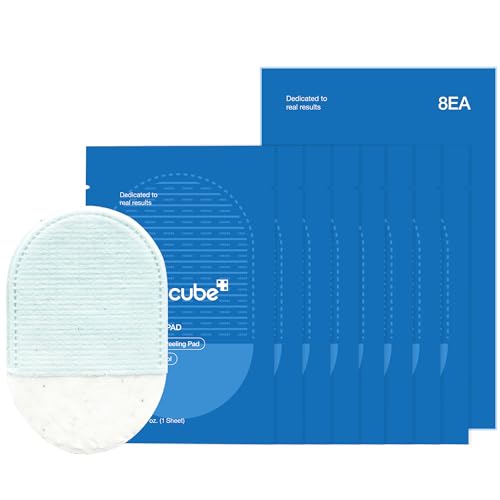
medicube Zero Pore Peel Pads 8EA, Face & Body Exfoliating Pads
Included for 'How to Use Medicube Zero Pore Pads in Your Routine' as a representative home product in this roundup; selection reflects the product set returned for this topic.
View on Amazon- Pack of 8 single-use pads meant for face and body
- Brand directions: gently buff the desired area, 1 to 2 times a week
- Soak includes glycerin, panthenol, and centella asiatica extract, and also lists denatured alcohol and fragrance components
- Brand suggests a patch test first if your skin is sensitive
Pros: low commitment for body areas such as upper arms or elbows; convenient for travel.
Cons: physical buffing is easy to overdo with pressure; the ingredient list includes alcohol and fragrance components that may bother sensitive skin.
Skip it if… you are looking for a daily toner pad. This is a once-or-twice-a-week step, not a routine staple.
Understanding the two sides
Each pad has an embossed, textured side and a smoother side. The textured side adds light physical exfoliation to the chemical exfoliants in the essence; the smooth side is gentler and suits a quick wipe or a short soak on sensitive areas. Medicube lists exfoliating acids in the formula, so check which version you own (Medicube sells several, such as Zero Pore Pad 2.0, a Mild version and Peel Pads) and read the current label for exactly which acids and concentrations your jar contains, as formulas can be updated between versions.
| Side | Best for | Pressure |
|---|---|---|
| Textured | T-zone, nose, chin, rough patches | Light sweeps, never scrubbing |
| Smooth | Cheeks, sensitive areas, a second wipe | Gentle glide or 1–2 minute press |
Where the pads go in your routine
Use them right after cleansing, on dry skin, as your toner step. They replace a toner rather than adding to it. Follow with hydrating serum, moisturizer and, in the morning, sunscreen.
Evening routine (recommended)
| Step | Product | Tip |
|---|---|---|
| 1 | Cleanser (double cleanse if wearing SPF) | Pat skin fully dry |
| 2 | Zero Pore Pad | Textured side on T-zone, smooth side on cheeks |
| 3 | Hydrating serum | Hyaluronic acid, panthenol or centella |
| 4 | Moisturizer | Barrier-supporting cream |
Morning use
Morning use is possible, but exfoliation increases sun sensitivity, so daily SPF 30+ becomes non-negotiable. Most people get better results and less irritation keeping pads to the evening.
How often to use them
| Skin type | Starting frequency | Maximum after 4 weeks |
|---|---|---|
| Oily, resilient | 3 nights per week | Per label directions, once skin is tolerating it |
| Combination | 2–3 nights per week | 4–5 nights |
| Dry | 2 nights per week | 3 nights |
| Sensitive | 1 night per week, smooth side only | 2 nights |
If you notice stinging with moisturizer, a tight shiny look, or flaking that did not exist before, you are over-exfoliating. Pause for a week, focus on barrier repair, and restart at a lower frequency.
How often should you use Medicube Zero Pore Pads? A week-by-week schedule
The question people type most often is some version of “how many times a week are you meant to use Medicube pore pads”. There is no single answer, because the brand gives a maximum, not a prescription. For the standard Zero Pore Pad 2.0 the directions allow use up to twice a day. For the Peel Pads 8EA the brand says once or twice a week. Real-world users report anything from twice a week to daily. The safest way to find your number is to start low and move up only when your skin shows no warning signs.
| Skin type | Weeks 1–2 | Weeks 3–4 | Week 5 onward (only if comfortable) |
|---|---|---|---|
| Oily, resilient | 2 evenings | 3 evenings | Every other evening to nightly |
| Combination | 2 evenings | 2–3 evenings | 3–4 evenings |
| Normal | 2 evenings | 3 evenings | 3–5 evenings |
| Dry | 1–2 evenings | 2 evenings | 2–3 evenings |
| Sensitive or reactive | Use the Mild version, 1–2 evenings, smooth side first | 2 evenings | 2–3 evenings; stop if stinging returns |
Can you use Medicube pore pads every day?
Yes, some people can, but daily use is not required to get the smoothing effect. If you want to use the pads nightly, make sure you have gone at least four weeks without stinging, tightness, or flaking at a lower frequency first. Daily exfoliation also means every other product in your routine needs to be gentle and barrier-friendly, and sunscreen the next morning is not optional.
A sample four-week calendar for the standard pad
- Week 1: Monday and Thursday evenings. Textured side on the nose and chin only, smooth side on the cheeks.
- Week 2: Same two nights. If nothing stings and skin feels comfortable the next morning, keep going.
- Week 3: Add Saturday. Keep a plain moisturizer night between every pad night.
- Week 4: Stay at three nights. Reassess in the mirror: is skin smoother and calm, or tight and shiny?
- Week 5 and beyond: Hold the frequency that kept skin calm. More is not better once texture has improved.
How long does one jar last?
A 70-pad jar lasts about 23 weeks at three pads a week, about 35 weeks at two a week, and just 10 weeks if used every night. Using one pad per session and closing the lid tightly matters, because a pad that dries out is wasted.
What “starting low” really means
Dermatology guidance on over-the-counter acids is consistent on one point: introduce one exfoliant at a time, at a low frequency, and judge it after a couple of weeks rather than after one use. Redness or tightness that appears the day after is information. Treat it as a reason to wait a few extra days between uses, not as a sign that the product is “working”.
What time of day should you use Medicube pore pads?
Evening is the usual recommendation. Acids such as lactic acid and salicylic acid can make skin more sun-sensitive, and nighttime gives your skin hours to settle before you apply sunscreen. Morning use is possible and the brand does not forbid it, but it makes a broad-spectrum SPF 30 or higher essential, and it leaves your skin with less time to recover. Never use the pads morning and night in the same day, particularly in your first month.
| Time | Best for | What to watch |
|---|---|---|
| Evening | Most people; default choice | Pair with a calm moisturizer afterward |
| Morning | Oily skin that feels slick by midday; makeup prep | Needs sunscreen; skip if you plan long sun exposure without reapplying |
| Both | Not recommended while building tolerance | Raises the chance of over-exfoliation |
Which comes first: Medicube pore pad, toner, or serum?
Because the pad is itself a toner, it replaces your toner step rather than sitting on top of one. The order that fits most routines is cleanser, pad, hydrating serum, moisturizer, then sunscreen in the morning. If you use a separate watery toner, put it after the pad or skip it on pad nights. Thicker serums and creams always come last. Wait about 30 to 60 seconds after the pad so the soak settles before layering.
- Before the pad: only cleansing. Pat the face fully dry; damp skin absorbs acids faster and can sting more.
- After the pad: hydrating serum with hyaluronic acid, panthenol, or centella, then a moisturizer.
- Vitamin C: keep it for the morning on pad nights, or alternate days.
Can you use Medicube Zero Pore Pad with retinol or tretinoin?
With over-the-counter retinol, the cautious default is to use the pad and the retinol on different nights. Users sometimes ask whether Medicube pads are okay with tretinoin. Tretinoin is a prescription retinoid, and combining it with an AHA and BHA pad can raise irritation. This is a question for the person who prescribed it, so ask your dermatologist or prescriber before adding any exfoliating acid to a tretinoin routine, and do not guess. For general cases, a simple pattern is: pad on one night, retinoid on the next, plain moisturizer on a recovery night.
What about the 2.0 pad and retinol on the same day?
If you are comfortable with both and your skin is tolerant, some people do the pad in the morning and the retinoid at night. That arrangement keeps the two actives apart. It still requires sunscreen and a slow ramp-up, and it is not for sensitive skin.
Pairing with other actives
Retinoids
Do not use the pads and a retinoid on the same night unless your skin is very tolerant. Alternating nights is the safer default: pads one evening, retinoid the next, recovery nights in between.
Vitamin C
Keep vitamin C in the morning and pads in the evening. Both are acidic, and stacking them increases the odds of stinging.
Other exfoliants
Skip other AHA/BHA toners, peels and scrubs while using the pads. One exfoliating product is enough for almost everyone.
Niacinamide, hyaluronic acid, ceramides
All fine after the pad. They help rebalance and support the skin barrier after exfoliation.
How to use Medicube Zero Pore Pads step by step
If you have searched “how to use the Medicube pads” or “Medicube zero pore skincare which to do first”, this is the full sequence for the Zero Pore Pad 2.0 and Mild versions. The Peel Pads 8EA follow their own simpler directions: buff the area lightly once or twice a week and moisturize afterward.
- Cleanse. Remove sunscreen and makeup first. An oil or balm cleanser followed by a gentle water-based cleanser works well on evenings you wore SPF.
- Dry your face completely. Pat with a clean towel. Acids on damp skin tend to feel stronger.
- Take one pad with the tweezers or clean, dry fingers. One pad is enough for face and neck.
- Start with the embossed side. Sweep from the center of the face outward, with light pressure on the nose, chin, and forehead. Avoid the eye area and lips, and do not scrub.
- Flip to the smooth side. Use it over the cheeks and any area that feels sensitive. This side is the gentler pass.
- Do not rinse. Pat any leftover moisture into the skin.
- Wait about a minute, then apply a hydrating serum and moisturizer. In the morning, finish with sunscreen.
- Close the lid firmly so the remaining pads stay moist.
Which side of the Medicube pad do you use first?
The embossed side goes first because it does the light physical exfoliation. The smooth side follows as the gentler, wiping pass. If you have sensitive skin, reverse the logic: use only the smooth side for the first two weeks and add the embossed side on the nose and chin once your skin has settled.
Should you wash your face after using the pad?
No. The pad is designed as a leave-on step. Rinsing removes the soak and defeats the purpose. If the skin feels tacky, you probably used too much pressure or your next layer was too heavy; use a lighter serum rather than rinsing.
Can you cut a Medicube pad in half?
Yes, for small areas or sensitive skin, a halved pad stretches a jar further and lowers the dose. Cut with clean scissors, and put the unused half back in the jar rather than leaving it out to dry.
How to stop your Medicube pore pad jar from leaking or drying out
A frequent complaint is that the jar leaks or that the top pads dry out while the bottom ones swim in liquid. These are practical habits that help, not brand instructions:
- Store the jar upright, not on its side in a bag or drawer.
- Press the lid down until you feel it seat and make sure the rim and inner lid are free of residue before closing.
- When traveling, put the jar in a zip bag and keep it out of hot cars. Heat and pressure changes make leaks more likely.
- Do not add water or other liquids to rehydrate pads. It changes the concentration and can invite contamination.
- If liquid pools at the bottom, press the pads gently so they soak it up, and use the lower pads first.
- If a jar arrives with damaged packaging or a broken seal, contact the seller rather than using it.
How should you store Medicube pads?
Keep them at room temperature, away from direct sunlight and from extreme heat or cold, with the lid tightly closed. A bathroom shelf away from the shower works. Use tweezers or clean dry fingers every time, because wet fingers carry bacteria into the jar.
Can you use Medicube pore pads on your neck, chest, or back?
The neck is thinner and more sensitive than the face, so use the smooth side only and start once a week. For the chest or back, many people prefer the Peel Pads 8EA, which are intended for face and body. Avoid freshly shaved or broken skin on any area.
Getting the most from each pad
- Use one pad per session; halve it for small areas if the pads are well soaked.
- Close the lid tightly to stop the essence evaporating.
- Use the included tweezers or clean fingers so the jar stays hygienic.
- Press the smooth side onto a dry patch for a minute as a mini-soak instead of swiping repeatedly.
Medicube pore pad routines by skin type
The same pad behaves differently on different skin. Use the playbook that matches yours, and adjust according to how your skin feels the next morning.
Oily and congested skin
This is the group the standard Zero Pore Pad 2.0 is aimed at. Use the embossed side on the nose, chin, and forehead, then the smooth side across the cheeks. Start at two evenings a week, move to three after two weeks, and follow with a lightweight gel moisturizer. Oily skin can still be dehydrated, so a tight feeling after a pad means you should scale back.
Combination skin
Treat the zones separately. Use both sides on the T-zone and only the smooth side on the cheeks. Alternate pad nights with a hydration-only night, such as a calming serum and a ceramide moisturizer.
Dry skin
Choose the Mild 2.0 pad first, or use the standard pad on the smooth side only. One to two evenings a week is plenty. Apply a richer cream afterward, and stop if you see new flaking.
Sensitive or reactive skin
Patch test on the inner forearm or behind the ear for 24 hours before the first use on your face. Begin with the Mild version at one evening a week, smooth side only. If you have a known skin condition such as rosacea or eczema, ask a dermatologist before using any exfoliating pad.
Acne-prone skin
The standard pad contains salicylic acid, which is a common over-the-counter ingredient for clogged pores. It is not a treatment for acne, and the pad should never be used on open lesions. If you take or apply prescription acne medication, check with your dermatologist about adding an acid pad.
Mature skin
Gentle exfoliation can help skin look brighter and feel smoother, but mature skin is often drier and slower to recover. The Mild version, two evenings a week with a rich moisturizer and daily sunscreen, is a good starting point.
Do Medicube pore pads shrink pores or remove blackheads?
Pore size is largely set by genetics, oil production, and skin structure. No topical pad permanently changes it. What the pads can do is lift dead surface cells and loosen some surface oil, which may make pores look less obvious and skin feel smoother for a time. Blackheads are oxidized oil and debris in the pore; regular exfoliation with salicylic acid may help keep them from building up, but results vary and you should not expect a single use to clear them. Squeezing or scrubbing aggressively makes irritation more likely, not better results.
Signs of over-exfoliation and how to recover
| Sign | What it may mean | What to do |
|---|---|---|
| Stinging when applying plain moisturizer | Barrier is compromised | Stop pads for 1–2 weeks; use only cleanser, moisturizer, and sunscreen |
| Tight, shiny look | Too much exfoliation or too little moisture | Cut frequency in half |
| New flaking or rough patches | Dead skin building up from irritation | Pause acids; do not scrub the flakes off |
| Redness that lasts into the next day | Inflammation | Pause; if it persists beyond a week, see a dermatologist |
| Breakouts that feel sore, not clogged | Irritation rather than congestion | Simplify the routine and wait for calm skin before resuming |
Recovery usually means a few days to a couple of weeks of a stripped-down routine: a gentle cleanser, a barrier-supporting moisturizer, and sunscreen. Restart at a lower frequency than before.
Common mistakes with Medicube Zero Pore Pads
- Scrubbing instead of sweeping. The embossed side is meant to glide; pressure does not make it more effective.
- Using two or three pads in one session. One pad per application is the brand’s directions.
- Stacking acids. Other AHA or BHA toners, peels, and strong vitamin C in the same routine raise irritation risk.
- Forgetting sunscreen. Exfoliated skin needs daily protection.
- Applying to freshly shaved, sunburned, or broken skin. Wait until it heals.
- Judging too soon. Smoother texture typically takes a few weeks of steady use; permanent pore reduction is not a realistic expectation.
- Leaving the jar open. Dried-out pads are less effective and harder to use evenly.
Who should avoid them
Skip or ask a dermatologist first if you have active eczema, rosacea flares, a damaged barrier, open acne lesions, a sunburn, or you are using prescription retinoids or other exfoliating medications. People sensitive to salicylates should check the label for salicylic acid. Stop if you get burning, persistent redness or swelling.
Patch testing and when to talk to a dermatologist
Patch testing is a simple habit that avoids most bad surprises. Wipe a small area of the inner forearm or behind the ear with the pad, leave it, and watch for 24 hours. Redness, itching, burning, or swelling means the product is not for you. Repeat on the jawline for another day before moving to the full face.
Book a dermatologist visit, or at least ask one before starting, if any of the following apply:
- You are pregnant or breastfeeding. Some product information advises against these pads during pregnancy because they contain salicylic acid, so confirm with your clinician.
- You use a prescription retinoid, prescription acne medication, or any treatment that thins or sensitizes the skin.
- You have eczema, psoriasis, rosacea, seborrheic dermatitis, or recurring perioral rashes.
- You have had a recent chemical peel, laser treatment, or microneedling.
- Your skin burns, swells, or blisters after use. Stop immediately.
How we put this guide together
This guide is research-based. We compared the brand’s published directions, ingredient lists on maker and retailer pages, and commonly cited dermatology guidance on exfoliating acids, and we checked the claims people repeat about frequency and pairing against them. We did not run a clinical study, and individual skin varies. Where sources disagree, such as how often the standard pad should be used, we recommend the more conservative route and say why.
Quick scenario guide: which setup fits you?
| Your situation | Pad to choose | Frequency | Pair it with |
|---|---|---|---|
| Oily T-zone, rough nose texture | Zero Pore Pad 2.0 | 2–3 evenings a week | Gel moisturizer, SPF daily |
| Dry cheeks, bumpy chin | Zero Pore Pad Mild 2.0 | 2–3 evenings a week | Ceramide cream |
| Reactive skin, first time with acids | Zero Pore Pad Mild 2.0, smooth side | 1 evening a week to start | Fragrance-free moisturizer |
| Rough elbows, upper arms, back | Zero Pore Peel Pads 8EA | Once or twice a week | Body lotion |
| On retinoid or prescription treatment | Ask your dermatologist first | As advised | As advised |
Medicube pad FAQ: more questions people ask
How often should you use Medicube Zero Pore Pad?
Two to three evenings a week for the first month is a sensible start. The brand’s directions allow up to twice a day for the standard 2.0 pad, but you should only approach that if your skin has stayed comfortable for several weeks.
Do you use Medicube Zero Pore Pad daily?
You can if your skin tolerates it, but you do not need to. Many people get the smoother feel they want at three evenings a week. Switch to daily only if there is no stinging, tightness, or flaking.
What time of day should I use Medicube pore pads?
Evening is best for most people because acids can increase sun sensitivity. If you use them in the morning, wear a broad-spectrum SPF 30 or higher and reapply when outdoors.
Can I use Medicube Zero Pore Pad 2.0 with retinol?
Use them on separate nights to be safe. Retinoids and exfoliating acids both increase dryness and irritation, so layering them together is not recommended for most skin.
Is Medicube toner pad okay with tretinoin?
That is a question for your prescriber. Tretinoin is a prescription retinoid, and adding an AHA and BHA pad may raise irritation, so get specific advice before combining them.
Which side of the Medicube pad do I use first?
Begin with the embossed side for the oilier zones, then flip to the smooth side. Sensitive skin should use only the smooth side at first.
Why is my Medicube pore pad jar leaking?
Usually because the lid is not fully seated, the jar is stored on its side, or heat has pushed liquid out. Store it upright, wipe the rim before closing, and avoid hot spaces.
Do Medicube pads shrink pores?
No topical pad permanently changes pore size. They can help skin look smoother and pores look less noticeable by removing surface dead cells and oil.
How many pads should I use per session?
One. A second pad adds irritation risk without extra benefit.
Can I use the pads while pregnant?
Ask your doctor or midwife first. Some product information recommends against use in pregnancy because of the acids, and individual advice should come from your own clinician.
FAQ
Should I rinse after using the pad?
No. The essence is meant to stay on the skin. Let it dry for 30–60 seconds, then continue with your routine.
Can I use them on my body?
Check your version first, since Medicube also makes separate pads intended for the body. If your label allows body use, treat areas like the back or chest with texture or bumps, use a fresh pad and avoid freshly shaved skin, which is more likely to sting.
Bottom line
Treat Medicube Zero Pore Pads as your exfoliating toner, not an extra step. Use them in the evening on dry skin, textured side on oily zones and smooth side on delicate ones, start two or three nights a week, and keep retinoids and other acids on separate nights. Slow, consistent use beats daily scrubbing for smoother-looking texture.
Ready to decide? Our #1 pick for 2026 is the medicube Zero Pore Pad 2.0.
Live price & availability on Amazon.