Last updated: September 26, 2026
Combination skin is the most common skin type and one of the most confusing to shop for. The forehead, nose and chin produce more oil and are prone to shine and blackheads, while the cheeks can feel normal or even tight and dry. Serums marketed for oily skin can dry out the cheeks, and rich hydrating serums can congest the T-zone. The best approach is to choose serums that balance rather than strip, and sometimes to apply different serums to different zones. This guide shows how.
What combination skin needs
- Oil balance in the T-zone without harsh drying.
- Hydration on the cheeks and around the eyes.
- Pore care for blackheads and visible pores.
- Barrier support everywhere, since over-cleansing to control shine often dehydrates the rest of the face.
Serum ingredients that suit combination skin
| Ingredient | Benefit for combination skin | Where to apply |
|---|---|---|
| Niacinamide 4–5% | Balances oil, supports barrier, refines look of pores | Whole face |
| Hyaluronic acid / glycerin | Lightweight hydration without heaviness | Whole face, extra on cheeks |
| Salicylic acid 1–2% | Clears pores, reduces blackheads | T-zone only |
| Azelaic acid 10% | Evens tone, calms spots | Where needed |
| Retinol (low) | Refines texture and pores over time | Whole face, 2–3 nights a week |
| Zinc PCA | May help with shine | T-zone |
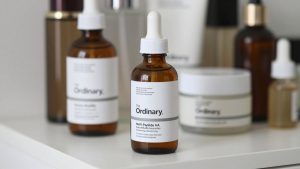
Niacinamide serums, including options from The Ordinary, Paula’s Choice, The Inkey List and Beauty of Joseon, are among the most versatile choices, typically $6–$45. Check the current price and choose a lightweight, fragrance-free formula.

The Ordinary Niacinamide 10% + Zinc 1%, Smoothing Serum for Blemish-Prone Skin, 1 Fl Oz
Included for 'Best Serum for Combination Skin: Balancing an Oily T-Zone and Dry Cheeks' because the listing specifies Smoothing Serum for Blemish-Prone Skin and 1 Fl Oz, details this guide uses to compare options.
View on Amazon
The Ordinary Balancing & Clarifying Serum, Multi-Active Solution for Oil Control and Pore Refinement, 1 Fl Oz
Included for 'Best Serum for Combination Skin: Balancing an Oily T-Zone and Dry Cheeks' because the listing specifies Multi-Active Solution for Oil Control and Pore Refinement and 1 Fl Oz, details this guide uses to compare options.
View on Amazon
Good Molecules Hyaluronic Acid Serum for Face, Hydrating Serum, 1 fl oz
Included for 'Best Serum for Combination Skin: Balancing an Oily T-Zone and Dry Cheeks' because the listing specifies Hydrating Serum and 1 fl oz, details this guide uses to compare options.
View on Amazon
SKIN1004 Madagascar Centella Poremizing Fresh Ampoule 3.38 fl. oz(100ml) | Soothing Hydration | Oily Combination Skin
Included for 'Best Serum for Combination Skin: Balancing an Oily T-Zone and Dry Cheeks' because the listing specifies Soothing Hydration and Oily Combination Skin, details this guide uses to compare options.
View on AmazonThe multi-zone approach
You do not have to use one serum everywhere. A simple, effective strategy is:
- Apply a niacinamide or hyaluronic serum to the whole face.
- On evenings when you exfoliate, apply salicylic acid only to the nose, chin and forehead.
- Use a slightly richer moisturiser on the cheeks and a gel moisturiser on the T-zone, or one lightweight lotion everywhere with an extra layer on dry patches.
This “multi-zoning” keeps the oily areas clear without over-drying the cheeks.
A sample routine
Morning
Gentle gel cleanser or water rinse, niacinamide serum, lightweight moisturiser, and a non-greasy SPF 30–50. Fluid or gel sunscreens usually suit combination skin better than thick creams.
Evening
Cleanse (double cleanse if wearing sunscreen or makeup). Alternate nights: salicylic acid on the T-zone, low-strength retinol on the whole face, and hydrating-only nights. Finish with moisturiser.
Common mistakes
- Treating the whole face as oily. Stripping cleansers and alcohol toners often lead to tight cheeks and even more T-zone oil.
- Skipping moisturiser. Oily areas still need hydration; a gel texture is enough.
- Too many actives. Pick one exfoliant and one retinoid and alternate them.
- Heavy facial oils all over. Keep them for dry areas only, if at all.
How to judge a serum’s texture
Texture is a practical clue for combination skin. Watery, gel or light fluid serums absorb quickly and rarely feel heavy on the T-zone. Milky or slightly creamy serums suit drier cheeks. Oil-based serums are usually best kept to dry patches only. A quick test is to apply the serum to the back of your hand and check it after five minutes: if it still feels slick, it may be too rich for your nose and forehead. Also check how it layers under sunscreen; some serums pill when combined with silicone-heavy SPF, which is frustrating on a shiny T-zone.
Blotting versus reapplying
Midday shine does not mean the morning serum failed. Blotting papers remove surface oil without disturbing sunscreen, and they are gentler than powdering repeatedly. If shine appears within an hour, your moisturiser or sunscreen may be heavier than your T-zone needs.
Seasonal adjustments
Combination skin often shifts with the weather. In summer and humid climates, the T-zone may get oilier and the cheeks more normal, so lighter layers work. In winter, cheeks may flake while the T-zone stays oily, so a richer cream on the cheeks and reduced exfoliation help.
Cautions
- Pregnant or breastfeeding: avoid retinoids; ask your clinician about salicylic acid leave-ons.
- On isotretinoin: skip exfoliants and retinoids unless your prescriber advises otherwise.
- If you have frequent inflamed or painful breakouts, or redness that does not settle, see a dermatologist, as it may be acne or rosacea needing treatment.
FAQ
Is niacinamide good for combination skin?
Yes. It is one of the most useful single serums for combination skin, as it helps regulate oil, supports hydration and improves the look of pores and tone.
Can I use hyaluronic acid on an oily T-zone?
Yes. Hyaluronic acid adds water, not oil, so it hydrates without adding shine. Follow with a light moisturiser.
Bottom line
For combination skin, the most versatile serum is niacinamide, supported by hydrating serums on the whole face and salicylic acid on the T-zone only. Multi-zone where it helps, avoid stripping products, adjust with the seasons, and check the current price before buying.