Last updated: October 4, 2026
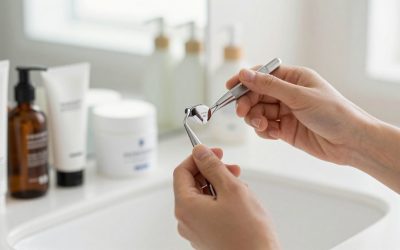
Dermaplaning sounds deceptively simple: glide a blade across your face, lift away dead skin and peach fuzz, and wake up with a smoother canvas. In practice, it is one of the most inconsistent treatments in skincare. A good tool leaves your skin looking lit-from-within and makes foundation apply flawlessly. A bad one nicks you around the jaw, tugs at coarse hair, or feels so blunt after two uses that you stop reaching for it entirely.
After putting eight of the best dermaplaning tools through repeated use on different skin textures and hair types, the pattern became clear: the difference between a $5 razor and a $120 system often comes down to how well the blade is held at the correct angle, not sharpness alone. Cheap tools dull quickly and encourage sloppy technique, which is exactly how people end up with redness and micro-tears. Here is what worked, what failed, and which tool earns a spot in your cabinet.
As an Amazon Associate we earn from qualifying purchases at no extra cost to you.



Quick Picks
| Product | Best For | Price |
|---|---|---|
| Kitsch Dermaplane Razor (Terracotta) | Bulk value and beginners | under $10 |
| Schick Hydro Silk Touch-Up (3 ct) | First-time trial | under $10 |
| Michael Todd Sonicsmooth | Vibration-assisted comfort | under $100 |
| Kitsch Dermaplane Razor (Blush) | Same blades, different color | under $10 |
| Sonicsmooth Pro+ System | Complete routine with brow tool | under $150 |
| Tweezerman Facial Razor | Precision on smaller areas | under $20 |
| Schick Hydro Silk Touch-Up (9 ct) | Regular weekly use | under $20 |
| Swann Morton Scalpel Handle | Advanced users seeking control | under $30 |
How We Picked
We evaluated each tool on four criteria: blade-to-skin angle stability (how well the design keeps you at the correct 45-degree plane), longevity under normal pressure, ease of rinsing after use, and comfort on sensitive zones like the nose and jawline. Price per use was a secondary factor, important enough to separate winners from also-rans but not decisive enough to recommend a tool that felt wrong on the skin.
The 8 Best Dermaplaning Tools in 2026
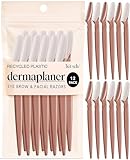
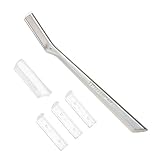
1. Kitsch Dermaplane Razor – Terracotta (12 pcs)
Twelve razors for under nine dollars makes this the obvious entry point for anyone curious about dermaplaning without committing to a single expensive purchase. The plastic handle is lightweight and the guard keeps contact gentle, which suits beginners who still apply too much pressure. Blades are functional for a few sessions each before softening noticeably.
- Pro: Lowest cost per session of any tool tested
- Pro: Guard prevents the most common first-week mistakes
- Con: Handle flexes under pressure, making angle control harder on the chin
Skip if you want a tool that maintains sharpness past three or four uses without a swap.
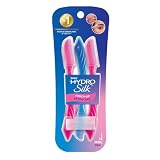
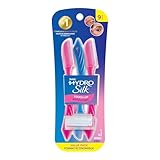
2. Schick Hydro Silk Touch-Up (3 ct)
Three razors for under $10 is the cheapest way to test whether dermaplaning suits your skin before buying in volume. The Hydro Silk blade coating reduces the tugging sensation that makes first-timers flinch, and the rounded head navigates around the nose reasonably well. Build quality is serviceable but not memorable.
- Pro: Moisture strip minimizes drag on dry patches
- Pro: Widely available for quick replacement
- Con: Only three blades means frequent reordering for weekly use
Skip if you already know dermaplaning works for you and just need a replenishment path.
3. Michael Todd Beauty Sonicsmooth
This cordless device uses sonic vibration to relax the skin surface as the blade passes, which genuinely reduces the tickle-and-resistance feeling that plagues manual razors on fine hair. The weight is well-balanced and the head locks at a fixed angle, removing technique error. It is the most comfortable dermaplaning experience available short of a professional treatment.
- Pro: Vibration noticeably softens the hair-removal sensation
- Pro: Fixed-angle head eliminates guesswork
- Con: Rechargeable battery adds a maintenance step and a failure point
Skip if you prefer disposable simplicity or travel light without charging cables.
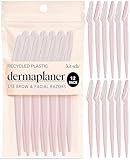
4. Kitsch Dermaplane Razor – Blush (12 pcs)
Identical blades and build to the Terracotta version, differing only in handle color. It earns a separate listing because the colorway matters to people who display tools in open bathroom storage or gift them. Performance is the same: adequate sharpness for a handful of sessions, flexible plastic handle, and a per-unit cost that is nearly impossible to beat.
- Pro: Same bulk value as the Terracotta pack
- Pro: Color options make it easy to share or gift without confusion
- Con: Same flex issue around the jaw as its twin
Skip if you are choosing between colors; pick whichever reads easier in your routine.
5. Michael Todd Beauty Sonicsmooth Pro+
The Pro+ adds a dedicated eyebrow trimmer head to the Sonicsmooth platform, consolidating two tools into one rechargeable unit. The dermaplaning experience matches the base Sonicsmooth closely, and the brow attachment is surprisingly effective at cleaning up stray hairs without the awkwardness of a separate micro-trimmer. The $120 price tag is steep, but it replaces two standalone devices.
- Pro: Dual-head system covers face and brows in one tool
- Pro: Magnetic head swap is quick and secure
- Con: Highest entry cost in this roundup by a wide margin
Skip if you already own a brow razor or see dermaplaning as a monthly rather than weekly ritual.
6. Tweezerman Facial Razor Stainless Steel
Stainless steel construction gives this razor a rigidity that plastic-handled competitors lack, translating to better angle control along the jaw and upper lip. The head is smaller than most, which makes it a precision instrument for targeted areas but slower on the cheeks. Blades are replaceable via a simple screw cap.
- Pro: Metal handle provides superior steadiness and durability
- Pro: Replaceable blades mean long-term cost is low
- Con: Small head coverage makes full-face sessions time-consuming
Skip if you want a quick full-face pass before applying makeup in the morning.
7. Schick Hydro Silk Touch-Up (9 ct)
The nine-pack solves the replenishment problem that makes the three-pack impractical for regular use. Performance per blade is identical to the smaller pack: the Hydro Silk coating still eases the initial pass, and the rounded head handles curves without digging. For under $20 for nine, you are paying about $1.65 per blade, which is fair for the comfort level provided.
- Pro: Bulk pack suits weekly or twice-weekly routines
- Pro: Moisture strip still works well after the first rinse
- Con: Plastic head has more flex than the Tweezerman, affecting precision on the chin
Skip if you only dermaplane occasionally and would rather pay less per individual blade.
8. Swann Morton Scalpel Handle No. 3
A professional-grade stainless steel handle designed to accept #10 or #11 surgical blades. This is the closest a consumer can get to the exact tool an esthetician uses, and the rigid construction offers unmatched angle control once the blade is properly seated. The learning curve is real: without a guard, there is nothing preventing a deep nick on curved areas like the nose wings.
- Pro: Absolute precision and durability; will outlast every other tool here
- Pro: Compatible with a wide range of standard blades at minimal cost
- Con: No safety guard means higher risk of cuts for inexperienced users
Skip if you have never dermaplaned before or have uneven skin texture with active breakouts.
Buying Guide
Blade Angle and Handle Rigidity
The single most important factor in safe, effective dermaplaning is maintaining approximately a 45-degree angle between blade and skin. Tools with a fixed or guided head (the Sonicsmooth, Schick with its rounded profile) enforce this automatically. Open-blade designs (Swann Morton, Tweezerman) depend entirely on your hand. If you are building a habit, choose a guided tool first and graduate to an open blade once you develop spatial confidence on your own face.
Blade Lifespan and Replacement Economics
Dermaplane blades are not permanent. Most disposable razors stay sharp for three to five full-face sessions. Rechargeable devices use replaceable cartridge blades that last longer per swap but cost more upfront. Calculate price per session, not price per unit: the Kitsch 12-pack and the Swann Morton with bulk #10 blades both come in under a dollar per use, while the Sonicsmooth amortizes across hundreds of sessions if maintained well.
Comfort on Sensitive Zones
The nose, brow bone, and jaw corner are where dermaplaning goes wrong for most people. Rounded heads and moisture strips reduce friction in these spots. Vibration-assisted tools relax the skin enough to prevent the micro-hesitation that causes pressure spikes and nicks. If you have rosacea-prone or thin skin, prioritize the Sonicsmooth or the Schick Hydro Silk over any open-blade option.
Our Verdict
Top pick: Michael Todd Sonicsmooth. The vibration-assisted comfort and fixed-angle head make it the best dermaplaning tool for daily-life use, and it delivers results closest to a professional session without requiring technique mastery.
Budget pick: Kitsch Dermaplane Razor, Terracotta 12-pack. At 75 cents per use, it removes every excuse not to try the treatment consistently.
Situational winner: If you want a tool that lasts years and you are willing to learn the angle, the Swann Morton Scalpel Handle paired with affordable blades outperforms everything else on precision and long-term cost.
FAQ
How often can you dermaplane?
Once per week is the maximum most dermatologists consider safe for at-home use. Going more frequently risks stripping the stratum corneum and triggering irritation or increased sensitivity to active skincare ingredients.
Does dermaplaning make hair grow back thicker?
No. The blunt-cut end of regrowing vellus hair can feel coarser to the touch, but the follicle itself is unchanged in diameter or density. This is a tactile illusion, not a biological effect.
Can you dermaplane over active acne?
Avoid it. Passing a blade over a papule or pustule can open the lesion, spread bacteria, and increase the chance of post-inflammatory hyperpigmentation. Wait until the breakout is flat and closed.
Is dermaplaning painful?
It should not be. Properly performed dermaplaning feels like light scraping, similar to a smooth razor on dry skin. If you feel pulling or pinching, the blade is dull or you are applying too much pressure at the wrong angle.