Last updated: November 23, 2026
Furniture projects produce dust in waves. A table saw cut throws chips, a router leaves a trail of shavings, and hours of sanding fill the air with fine dust that clogs a vacuum filter. A separator that only handles chips will still leave the sander struggling, while one that is too small will fill before a tabletop is sanded. The right separator for furniture work handles both the volume of rough work and the fine dust of finishing.
This guide is for furniture makers, weekend builders, and anyone moving from small crafts to tables, cabinets, and chairs. The separators below were chosen from their Amazon titles and listed specifications, with attention to airflow, bucket size, and hose reach. The picks include larger cyclones for planer work, complete kits for general use, and a low-profile option for a bench that already holds a project in progress.
Quick Picks
As an Amazon Associate we earn from qualifying purchases
| Product | Best for | Key spec from title |
|---|---|---|
| Oneida Dust Deputy 2.5 Deluxe 5-Gal | Shops with larger shop vacuums that need higher airflow and a complete portable kit. | Clear collapse-proof 5-gallon bucket |
| Oneida Dust Deputy Deluxe 5-Gal | Home workshops that want a complete, ready-to-roll 5-gallon kit with no extra parts to source. | Clear collapse-proof 5-gallon bucket |
| Oneida Dust Deputy Low-Pro Deluxe | Low benches and tight shops where a tall cyclone would not fit under the work surface. | Clear 5-gallon dust collection bucket |
| Oneida Dust Deputy 2.5 DIY | Confident DIY buyers with a larger vacuum who want to build their own separator cart. | Clear anti-static cyclone separator attachment |
How to Choose
Plan for the tools that make the most dust
Not every tool needs the same separator. A planer and a jointer produce volume, a table saw produces a mix of chips and fine dust, and a sander produces fine dust that clogs filters fastest. List the tools that will connect most often and the dust each one makes, then size the separator and the container for the heaviest of them. A separator that copes with the planer will handle the sander easily, while one sized only for sanding will fill too fast on a planing day.
Size the container for the work, not the shelf
The bucket or drum decides how often the work stops. A 5-gallon bucket suits sanding, trimming, and short sessions, while planer shavings and cabinet parts fill it quickly. A 10-gallon or 15-gallon container suits longer runs and a fixed station, but it needs floor space and a clear path for emptying. A clear bucket helps because the fill level is visible without lifting the lid. Whatever the size, leave headroom below the cyclone so dust can drop cleanly instead of packing up into the cone.
Consider fine dust, not just chips
Chips are visible, but fine sanding dust is the material that clogs filters and hangs in the air. A cyclone that spins out heavy chips yet lets fine dust through will still leave the vacuum filter to do the hard work. Look for a tapered cone, an anti-static body, and a design described for fine dust as well as bulk debris. Keep the hose short, seal the lid, and empty the bucket before fine dust packs near the cyclone outlet. The goal is cleaner air at the tool, not just a fuller bucket.
Match the separator to the vacuum or collector
Start with the machine that moves the air, because a separator cannot fix a mismatch. A small shop vacuum pairs well with a compact cyclone and a short hose, while a larger vacuum or a single-stage dust collector needs wider ports and a larger cyclone body. Check the hose diameter at the vacuum and at the tool, then look for a separator whose ports and adapters bridge those sizes without a stack of reducers. A separator that is too large for a small vacuum will lose the spin that drops dust out, and one that is too small for a big collector will choke airflow. Measure first, then choose.
The 4 Best Options
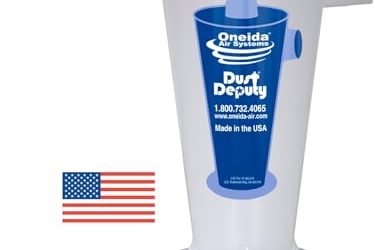
Oneida Air Systems Dust Deputy 2.5 Deluxe Cyclone Separator Kit: Portable Collector with Bucket for Wet/Dry Shop Vacuums (DD 2.5 Deluxe 5-Gal)

The larger 2.5 cyclone in this kit is built for vacuums that move more air than a standard small shop vacuum. It keeps the same clear 5-gallon bucket idea as the original Deluxe kit, with casters underneath so the unit can roll to the planer, the router table, or the sanding station. Heavier chips fall first, fine dust follows, and the vacuum filter sees far less material. That matters on jobs that produce a steady stream of shavings rather than a quick cleanup.
Specs
- Clear collapse-proof 5-gallon bucket
- Four caster wheels
- Anti-static Dust Deputy 2.5 cyclone
- For wet/dry shop vacuums
- Model AXD000004B
Best for: Shops with larger shop vacuums that need higher airflow and a complete portable kit.
Watch out for: Check the vacuum hose size and the larger cyclone footprint against the bench and the storage corner.
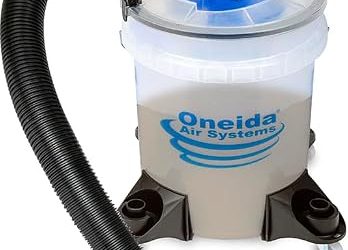
Oneida Air Systems Dust Deputy Deluxe Cyclone Separator Kit with Caster Mounts and Clear Collapse-Proof Bucket for Wet/Dry Shop Vacuums (DD Deluxe 5-Gal)

This is the straightforward pick for a shop that wants everything in one box and a short setup. The bucket, lid, cyclone, hose, and casters arrive as a matched set, so there is no hunt for adapters or a collapse-proof container. It suits a garage workshop where the vacuum moves between stations and floor space is shared with other tools. Empty the bucket before it reaches the lid, and the suction stays steadier through the day.
Specs
- Clear collapse-proof 5-gallon bucket
- Caster mounts for moving the kit around the shop
- Anti-static cyclone separator
- For wet/dry shop vacuums
- Airflow rating 50 to 150 CFM
Best for: Home workshops that want a complete, ready-to-roll 5-gallon kit with no extra parts to source.
Watch out for: Measure the assembled height against the space under the bench, and check that the casters roll freely on the shop floor.
Oneida Dust Deputy Low-Pro Deluxe Lid Dust Separator Kit with Clear 5-Gallon Dust Collection Bucket, 3 ft Hose, 2.5 in Adapter, and Mounted Casters for Shop Wet Dry Vacuums – Made in USA

Height is the deciding feature here. The low-profile lid stands only a short distance above the bucket, so the whole kit can slide under a workbench or sit beside a low tool stand without towering over the shop. The clear 5-gallon bucket shows the fill level, the 3 ft hose reaches the vacuum, and the mounted casters let the unit roll out when it is needed. It captures dust before the vacuum filter, which keeps suction steadier during sanding and sawing.
Specs
- Clear 5-gallon dust collection bucket
- 3 ft hose
- 2.5 in adapter
- Mounted casters
- Low-profile lid, 4 in tall
- Made in USA
Best for: Low benches and tight shops where a tall cyclone would not fit under the work surface.
Watch out for: Confirm the 4 in lid height still clears the bench, and check the adapter against the vacuum hose size.
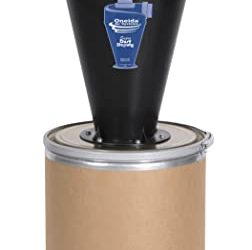
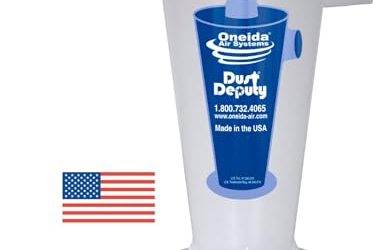
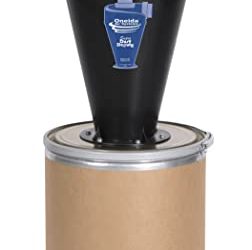
Oneida Air Systems Dust Deputy 2.5 DIY Cyclone Separator Attachment with Adapters for Wet and Dry Shop Vacuums, Accessory Only, Clear

Choose this attachment when the plan is a custom cart and the vacuum is already a strong one. The clear cyclone makes it easy to see whether material is dropping cleanly or hanging up near the inlet. It fits a shop where the separator lives on a dedicated cart with short hose runs to the main tools. Take time over the lid seal and the adapter fit, because a leak at either end will show up as lost suction.
Specs
- Clear anti-static cyclone separator attachment
- Adapters included
- For wet and dry shop vacuums
- Accessory only, bucket not included
- Larger 2.5 size for higher airflow
Best for: Confident DIY buyers with a larger vacuum who want to build their own separator cart.
Watch out for: Confirm the adapter sizes against the vacuum and tool hoses, and remember no bucket or lid is included.
Which One Fits Your Situation
Long sessions with a planer or jointer
Pick a larger container or a larger cyclone when shavings arrive by the armful. A 5-gallon bucket fills in minutes under a planer, while a 10-gallon drum or a 15-gallon bin keeps the work going. Match the cyclone to the collector or the larger vacuum, and plan an easy emptying route before the first board goes through.
A first separator for a new shop
Start with a complete 5-gallon kit that arrives ready to assemble, because the first separator should teach the habit of using dust collection rather than testing the patience of a new woodworker. A matched bucket, lid, hose, and casters remove the guesswork, and the clear bucket shows what the cyclone is catching. Once the routine is set, a second cyclone or a larger drum can follow.
Moving between several tools
Choose a kit on casters with a hose long enough to reach the next bench without moving the vacuum each time. A rolling separator follows the work, and a quick-connect fitting speeds the changeover. A fixed drum suits one station, but a mobile kit suits a shop where the saw, the sander, and the router table all share one vacuum.
A tight garage or basement shop
Choose the low-profile kit when headroom and floor space are the limits. It slides under a bench, rolls out for a job, and returns to its corner without blocking a walkway. A tall cone would waste the little vertical space available and tip more easily in a crowded room. Keep the hose short and the floor path clear.
Common Mistakes
- Choosing a bucket that is too small for planer shavings, so the work stops every few minutes to empty it.
- Letting the bucket overfill until dust packs into the cyclone cone and reaches the vacuum filter.
- Leaving the lid seal loose or the gasket out, which lets air leak in and cuts suction at the tool.
- Matching a large collector cyclone to a small shop vacuum, or a small cyclone to a large collector, and losing separation.
- Running a hose that is too long or full of sharp bends, which weakens airflow and lets dust settle inside the hose.
Frequently Asked Questions
Does a cyclone separator work with a sander?
Yes, and a sander is one of the best uses for it, because sanding dust clogs vacuum filters quickly. Keep the hose short, seal every connection, and use the adapter that matches the sander port. Fine dust still needs a good vacuum filter, but the cyclone removes the bulk before the filter sees it.
Will a cyclone separator keep my filter completely clean?
It will keep most chips and dust out of the vacuum, but some very fine dust still reaches the filter. The benefit is a filter that clogs far more slowly and suction that stays steadier through a job. Empty the bucket regularly and keep the lid sealed, and the filter will last noticeably longer than without a separator.
How often should I empty the separator bucket?
Empty it before the dust reaches the bottom of the cyclone cone, and sooner on planer or jointer days. A clear bucket makes this easy to judge at a glance. Letting it overfill pushes dust back toward the vacuum and reduces separation, so a quick empty during a break is better than a long clean-up later.
Do I need a special vacuum for a cyclone separator?
No. Most of the kits in this guide are made for a standard wet/dry shop vacuum, and the cyclone sits between the tool and the vacuum. Check the hose diameter and the airflow range, because a very small vacuum may struggle with a large cyclone and a very large vacuum may need the wider 2.5 size. The vacuum itself does not need a special motor.