Last updated: November 23, 2026
A professional shop measures a separator by uptime. Every minute spent emptying a small bucket or clearing a clogged filter is a minute not spent on a client job, and fine dust in the air is a health and quality problem, not just a mess. The right professional separator holds enough material for a long run, matches the dust collector or the larger vacuum, and survives daily use without a fragile lid or a collapsing bucket. Durability and capacity come before convenience.
This guide is for professional woodworkers, cabinet shops, and small production workshops. It compares separators chosen from their Amazon titles and listed specifications, including bin capacity, port sizes, horsepower range, and steel or fibreboard construction. The picks include large collector cyclones, a steel drum kit, and a high-airflow 5-gallon kit for stations that still use a shop vacuum.
Quick Picks
As an Amazon Associate we earn from qualifying purchases
| Product | Best for | Key spec from title |
|---|---|---|
| Oneida Super Dust Deputy 4/5 Deluxe | Shops with a single-stage dust collector that need a large-capacity cyclone upgrade. | 5 in inlet and 6 in outlet with 4 in reducers |
| Oneida Super Dust Deputy 4/5 DIY | Experienced builders upgrading a dust collector with their own bin and ducting. | Cyclone separator for 1 to 3 HP single-stage dust collectors |
| Oneida Dust Deputy Deluxe 10-Gallon Steel | Busy shops that fill a 5-gallon bucket quickly and want a steel drum that resists collapse. | 10-gallon steel drum |
| Oneida Dust Deputy 2.5 Deluxe 5-Gal | Shops with larger shop vacuums that need higher airflow and a complete portable kit. | Clear collapse-proof 5-gallon bucket |
| Oneida Dust Deputy Deluxe 5-Gal | Home workshops that want a complete, ready-to-roll 5-gallon kit with no extra parts to source. | Clear collapse-proof 5-gallon bucket |
How to Choose
Match airflow, not just brand names
Two separators from the same brand can suit very different machines. Airflow, measured in cubic feet per minute, is the number that matters, along with the port sizes. A kit rated for 50 to 150 CFM suits a shop vacuum, while a collector cyclone needs far more air to spin properly. Check the vacuum or collector rating, then match the separator to it. Brand loyalty is a poor substitute for a port and airflow match, and a mismatch shows up as weak suction at the tool.
Size the container for the work, not the shelf
The bucket or drum decides how often the work stops. A 5-gallon bucket suits sanding, trimming, and short sessions, while planer shavings and cabinet parts fill it quickly. A 10-gallon or 15-gallon container suits longer runs and a fixed station, but it needs floor space and a clear path for emptying. A clear bucket helps because the fill level is visible without lifting the lid. Whatever the size, leave headroom below the cyclone so dust can drop cleanly instead of packing up into the cone.
Look at the lid seal and the bucket strength
Separation depends on a sealed system. A lid that flexes or a bucket that bows under vacuum pressure lets air leak in and dust escape, and suction drops with it. Collapse-proof buckets and steel drums exist for this reason, and a good gasket or latch helps the lid hold its seal. Check how the lid locks, whether a gasket is included, and whether the bucket walls feel rigid. A strong seal is easy to overlook in a product photo and hard to fix after assembly.
Plan for the tools that make the most dust
Not every tool needs the same separator. A planer and a jointer produce volume, a table saw produces a mix of chips and fine dust, and a sander produces fine dust that clogs filters fastest. List the tools that will connect most often and the dust each one makes, then size the separator and the container for the heaviest of them. A separator that copes with the planer will handle the sander easily, while one sized only for sanding will fill too fast on a planing day.
The 5 Best Options
Oneida Air Systems Super Dust Deputy (4/5 Deluxe)

This is the step up from a shop vacuum separator. The Super Dust Deputy is designed to sit in front of a single-stage dust collector, catching shavings and fine dust before they reach the collector filter and bag. The 15-gallon fiberboard bin holds far more material than a 5-gallon bucket, and the quick-release latch makes emptying straightforward. It suits a shop where a dust collector already serves several machines through ducting or a long hose.
Specs
- 5 in inlet and 6 in outlet with 4 in reducers
- Fiberboard bin with quick-release latch
- Static dissipative resin cyclone
- 15-gallon waste capacity
- For 0.5 to 3 HP single-stage dust collectors
Best for: Shops with a single-stage dust collector that need a large-capacity cyclone upgrade.
Watch out for: Confirm the dust collector horsepower and airflow meet the minimum, and plan floor space for the 15-gallon bin.
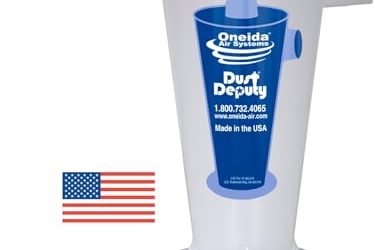
Oneida Air Systems Super Dust Deputy (4/5 DIY) Cyclone Separator for 1-3HP Single Stage Dust Collectors

Choose this attachment when the dust collector upgrade is a project in itself. It suits a shop with ducting to several machines, a custom bin, and a builder who is comfortable cutting and sealing a lid. The payoff is a collector filter that stays cleaner and a bag that fills far more slowly. Measure the ducting, plan the bin support, and seal every joint so the system holds its airflow.
Specs
- Cyclone separator for 1 to 3 HP single-stage dust collectors
- Static dissipative resin
- Accessory only, bin not included
- 5 in inlet and 6 in outlet
- Made in USA
Best for: Experienced builders upgrading a dust collector with their own bin and ducting.
Watch out for: Confirm the collector horsepower, the duct sizes, and the bin the cyclone will mount on before ordering.
Oneida Air Systems Dust Deputy Deluxe Cyclone Separator Kit With 10 Gallon Steel Drum

A steel drum changes the rhythm of a busy shop. Instead of stopping to empty a small bucket, the woodworker gets a 10-gallon container that holds planer shavings and sawdust through longer runs. The steel body resists the vacuum pressure that can collapse a thin plastic bucket, and the cyclone above it keeps most material out of the vacuum filter. It suits a fixed station where the separator does not need to move often.
Specs
- 10-gallon steel drum
- Anti-static cyclone separator
- For wet/dry shop vacuums
- Collapse-proof steel collection drum
- Made in USA
Best for: Busy shops that fill a 5-gallon bucket quickly and want a steel drum that resists collapse.
Watch out for: Check the floor space and the assembled height, and confirm the drum lid seal before heavy use.
Oneida Air Systems Dust Deputy 2.5 Deluxe Cyclone Separator Kit: Portable Collector with Bucket for Wet/Dry Shop Vacuums (DD 2.5 Deluxe 5-Gal)

Pick this kit when the vacuum is the strong part of the setup and the separator must keep up with it. The wider cyclone body handles higher airflow without choking the hose, and the clear bucket still makes the fill level easy to read. It is a good match for a shop that runs a planer or a jointer for extended periods. Give it a clear floor path, keep the hose short, and empty the bucket on a regular rhythm.
Specs
- Clear collapse-proof 5-gallon bucket
- Four caster wheels
- Anti-static Dust Deputy 2.5 cyclone
- For wet/dry shop vacuums
- Model AXD000004B
Best for: Shops with larger shop vacuums that need higher airflow and a complete portable kit.
Watch out for: Check the vacuum hose size and the larger cyclone footprint against the bench and the storage corner.
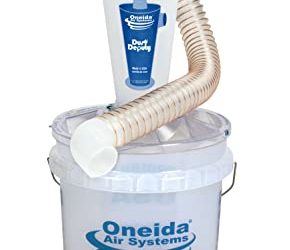
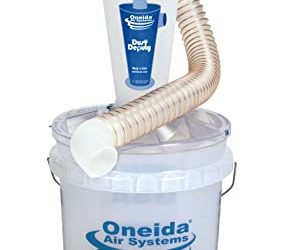
Oneida Air Systems Dust Deputy Deluxe Cyclone Separator Kit with Caster Mounts and Clear Collapse-Proof Bucket for Wet/Dry Shop Vacuums (DD Deluxe 5-Gal)

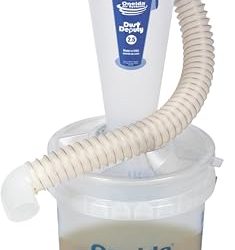
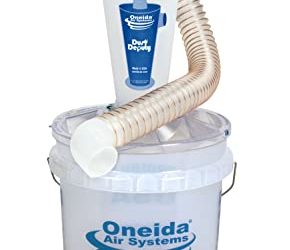
This complete kit answers the most common workshop problem: a shop vacuum filter that clogs halfway through a job. The cyclone sits above a clear 5-gallon bucket, so chips and dust drop into the bucket while cleaner air continues to the vacuum. Caster mounts let the whole unit follow the tool being used, from the table saw to the sander. The clear bucket shows the fill level at a glance, which helps avoid overfilling during a long session.
Specs
- Clear collapse-proof 5-gallon bucket
- Caster mounts for moving the kit around the shop
- Anti-static cyclone separator
- For wet/dry shop vacuums
- Airflow rating 50 to 150 CFM
Best for: Home workshops that want a complete, ready-to-roll 5-gallon kit with no extra parts to source.
Watch out for: Measure the assembled height against the space under the bench, and check that the casters roll freely on the shop floor.
Which One Fits Your Situation
Upgrading a dust collector
Choose a Super Dust Deputy when a single-stage collector already serves the shop and its filter clogs too often. The larger cyclone and bin sit in front of the collector and catch material before the filter. A shop vacuum cyclone is too small for this job, so match the cyclone to the collector horsepower and airflow.
Long sessions with a planer or jointer
Pick a larger container or a larger cyclone when shavings arrive by the armful. A 5-gallon bucket fills in minutes under a planer, while a 10-gallon drum or a 15-gallon bin keeps the work going. Match the cyclone to the collector or the larger vacuum, and plan an easy emptying route before the first board goes through.
Moving between several tools
Choose a kit on casters with a hose long enough to reach the next bench without moving the vacuum each time. A rolling separator follows the work, and a quick-connect fitting speeds the changeover. A fixed drum suits one station, but a mobile kit suits a shop where the saw, the sander, and the router table all share one vacuum.
A first separator for a new shop
Start with a complete 5-gallon kit that arrives ready to assemble, because the first separator should teach the habit of using dust collection rather than testing the patience of a new woodworker. A matched bucket, lid, hose, and casters remove the guesswork, and the clear bucket shows what the cyclone is catching. Once the routine is set, a second cyclone or a larger drum can follow.
Common Mistakes
- Matching a large collector cyclone to a small shop vacuum, or a small cyclone to a large collector, and losing separation.
- Choosing a bucket that is too small for planer shavings, so the work stops every few minutes to empty it.
- Letting the bucket overfill until dust packs into the cyclone cone and reaches the vacuum filter.
- Leaving the lid seal loose or the gasket out, which lets air leak in and cuts suction at the tool.
- Forgetting to plan where the full bucket will be emptied, so a heavy container must be carried across a crowded shop.
Frequently Asked Questions
Do I need a special vacuum for a cyclone separator?
No. Most of the kits in this guide are made for a standard wet/dry shop vacuum, and the cyclone sits between the tool and the vacuum. Check the hose diameter and the airflow range, because a very small vacuum may struggle with a large cyclone and a very large vacuum may need the wider 2.5 size. The vacuum itself does not need a special motor.
Will a cyclone separator keep my filter completely clean?
It will keep most chips and dust out of the vacuum, but some very fine dust still reaches the filter. The benefit is a filter that clogs far more slowly and suction that stays steadier through a job. Empty the bucket regularly and keep the lid sealed, and the filter will last noticeably longer than without a separator.
What hose size should I look for?
Match the hose to the vacuum outlet and the tool port, using the adapter supplied with the kit where needed. Many shop vacuums use a 2.5 in connection, while dust collectors use 4 in hose. A single adapter that fits both ends is better than a stack of reducers, which can leak and reduce airflow.
How often should I empty the separator bucket?
Empty it before the dust reaches the bottom of the cyclone cone, and sooner on planer or jointer days. A clear bucket makes this easy to judge at a glance. Letting it overfill pushes dust back toward the vacuum and reduces separation, so a quick empty during a break is better than a long clean-up later.