Last updated: October 12, 2026
- Head-to-head overview
- Shark CryoGlow vs CurrentBody specs side by side
- Which CurrentBody mask is the real rival to the Shark CryoGlow?
- Light therapy basics
- Shark CryoGlow or CurrentBody by skin goal
- Best LED face mask by price tier
- Is there a Shark CryoGlow dupe?
- Which to choose for your goals
- Daily use experience
- How fit and light distance change the comparison
- Wavelengths in plain language
- Noise, charging and storage
- Cost per session over two years
- How to fit either into your routine
- How we chose these LED masks
- What to expect from an LED mask in 8 to 12 weeks
- Who should avoid LED masks
- FAQ
- Bottom line
- Which LED mask should you buy: Shark CryoGlow or CurrentBody?
Shark CryoGlow and the CurrentBody Skin LED mask both sit in the premium at-home LED category, but they take different routes to the same goal. CurrentBody is a flexible silicone mask focused on red and near-infrared light. Shark CryoGlow adds more treatment modes and a cooling under-eye feature in a rigid, hands-free design. If you are deciding between them, the right answer depends on what you want LED to do and how you like to use a device.
Updated October 2026 — Shark CryoGlow or current body? Pick the Shark CryoGlow if you want blue light for blemish-prone skin, a cooling under-eye feature and shorter 4 to 8 minute sessions. Pick a CurrentBody mask if you want a flexible silicone mask that sits close to the face and a focus on red and near-infrared light for fine lines and texture.
In short: the Shark CryoGlow is the more versatile device, the CurrentBody Skin LED Light Therapy Mask Series 2 is the simpler anti-aging device, and the CurrentBody Series 3 is the newer, higher-tier model that adds blue, green and yellow light. None of them is a medical treatment, results are gradual and vary, and anyone with a skin condition, light sensitivity or photosensitizing medication should talk to a dermatologist first.
Quick answer: Our top pick in 2026 is the Wavelengths — our #1 rated choice. See the full ranked comparison, alternatives and buying advice below.
Head-to-head overview
| Feature | Shark CryoGlow | CurrentBody Skin LED Mask |
|---|---|---|
| Light types | Red, near-infrared, blue (mode-dependent; check current specs) | Red and near-infrared (newer versions may add more; check the current listing) |
| Extra features | Cooling under-eye plates | Varies by version; check the current listing |
| Design | Rigid mask with head strap | Flexible silicone that contours to the face |
| Session length | Varies by mode; check the manual | 10 minutes |
| Typical price | Premium tier | Premium tier |
| Best for | Multiple concerns, puffiness, variety | Simple, focused anti-aging routine |
Specifications and modes can change between product generations; check the current listing before buying.

Shark CryoGlow LED Face Mask, Red Light Therapy, Under-Eye Cooling, FW312PL
Included for 'Shark CryoGlow vs CurrentBody LED Mask: Which Is Better?' because the listing adds cooling or gel-infused layers, which is the attribute this article compares.
View on Amazon
Shark CryoGlow LED Face Mask, Red Light Therapy, Under-Eye Cooling, FW312
Included for 'Shark CryoGlow vs CurrentBody LED Mask: Which Is Better?' because the listing adds cooling or gel-infused layers, which is the attribute this article compares.
View on Amazon
Shark CryoGlow LED Face Mask, Red Light Therapy, Under-Eye Cooling, FW312PK
Included for 'Shark CryoGlow vs CurrentBody LED Mask: Which Is Better?' because the listing adds cooling or gel-infused layers, which is the attribute this article compares.
View on AmazonShark CryoGlow vs CurrentBody specs side by side
This table compares the Shark CryoGlow with the two current CurrentBody face masks. Manufacturers and third parties publish irradiance figures that are not measured the same way, so treat power numbers as marketing claims and compare wavelengths, fit and session length instead.
| Spec | Shark CryoGlow | CurrentBody Series 2 | CurrentBody Series 3 |
|---|---|---|---|
| Wavelengths | Red 630 nm, near-infrared 830 nm, blue 415 nm | Red 633 nm, near-infrared 830 nm, deep near-infrared 1072 nm | Red 633 nm, near-infrared 830 nm, deep near-infrared 1072 nm, blue 415 nm, green 532 nm, yellow 590 nm |
| LED count | Reported differently by reviewers | 236 | 750 |
| Session length | 4 to 8 minutes for LED modes | 10 minutes | 10 minutes |
| Recommended use | Per mode, see the manual | 3 to 5 times a week | 3 to 5 times a week |
| Body of the mask | Rigid shell with head strap | Flexible silicone, optional chin strap | Flexible silicone, chin strap |
| Cooling | InstaChill under-eye cooling, 3 levels | None | None |
| Modes | Anti-aging, blemish and maintenance modes plus a cooling-only mode | One program | 4 presets plus app-based MyDose wavelength selection |
| Weight | About 674 g | Not published consistently | Not published consistently |
| Warranty | 2-year limited | 2 years per retailer comparisons | Check the current maker page |
| Price tier | Under $350 | Under $500 | Under $600 |
Mode names and exact session times differ slightly between reviewers and between product versions, so read the manual that ships with your unit.
Which CurrentBody mask is the real rival to the Shark CryoGlow?
When people ask whether the Shark CryoGlow or a CurrentBody mask is better, they are often comparing two different price tiers. The Shark sits below any current CurrentBody face mask, so the fairest matchups are the Shark against CurrentBody Skin LED Light Therapy Mask Series 2 for simplicity, and against CurrentBody Series 3 for features. The older Series 1 uses fewer LEDs (132) and only two wavelengths, so it is a different class of device.
CurrentBody Series 2 — Best for a simple anti-aging routine

CurrentBody Red Light Therapy LED Face Mask: Series 2
Included for 'Shark CryoGlow vs CurrentBody LED Mask: Which Is Better?' as a representative home product in this roundup; selection reflects the product set returned for this topic.
View on Amazon- Wavelengths: 633 nm red · 830 nm near-infrared · 1072 nm deep near-infrared
- 236 LEDs in a flexible silicone mask with an optional chin strap
- 10 minute session, 3 to 5 times a week
- Brand-stated power of 30 mW/cm²
- No blue light and no cooling
Pros:
- The flexible silicone is designed to sit close to the face, which is the main design argument CurrentBody makes against rigid masks.
- One program means no decisions to make.
- Deep near-infrared (1072 nm) is a wavelength the Shark does not offer.
Cons:
- It costs more than the Shark.
- There is no blue light for blemish-prone skin and no cooling feature.
Skip it if you want a blue light mode or a cooling feature.
CurrentBody Series 3 — Best for people who want more wavelengths and control

CurrentBody LED Light Therapy Face Mask: Series 3
Included for 'Shark CryoGlow vs CurrentBody LED Mask: Which Is Better?' as a representative home product in this roundup; selection reflects the product set returned for this topic.
View on Amazon- Six wavelengths: 633 nm red · 830 nm near-infrared · 1072 nm deep near-infrared · 415 nm blue · 532 nm green · 590 nm yellow
- 750 LEDs, with power up to 40 mW/cm² as stated by the brand
- 4 presets plus MyDose, an app feature for choosing wavelengths
- 10 minute session, 3 to 5 times a week
Pros:
- It closes the biggest gap with the Shark by adding blue light.
- Green and yellow light plus MyDose suit people who like to customize.
- Same flexible silicone fit approach as Series 2.
Cons:
- It sits in the premium price tier.
- App-based control adds a step to every session, and more options do not guarantee a better result.
Skip it if you want a plug-and-play device or you are watching the budget.
Dr. Dennis Gross DRx SpectraLite FaceWare Pro — Best for a 3 minute session
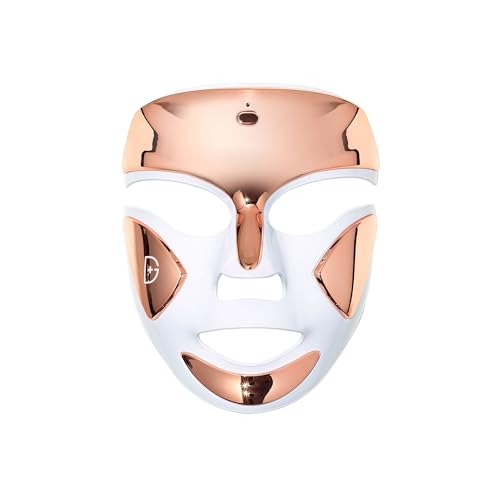
Dr Dennis Gross DRx SpectraLite FaceWare Pro 3-Minute LED Device
Included for 'Shark CryoGlow vs CurrentBody LED Mask: Which Is Better?' as a representative home product in this roundup; selection reflects the product set returned for this topic.
View on Amazon- Red 630 nm and blue 415 nm light, with red, blue and combined modes
- Programmed 3 minute treatment with automatic shutoff
- Rigid shell held with an adjustable strap
- Described by the brand as FDA-cleared
Pros:
- The shortest session in this comparison, so the habit is easy to keep.
- Has both red and blue light.
Cons:
- Reviewers do not agree that it includes near-infrared.
- Rigid fit and a premium price tier despite fewer wavelengths.
Skip it if you want near-infrared light or a flexible mask.
Light therapy basics
Red light (around 630 nm) and near-infrared (around 830 nm) are the most researched wavelengths for the look of fine lines, texture and radiance. Blue light (around 415 nm) is studied for blemish-prone skin because it targets acne-associated bacteria. Results for all wavelengths are gradual and depend on consistent sessions over 8–12 weeks.
Why fit matters
LED intensity drops as the distance from skin increases. CurrentBody’s flexible silicone sits close to the face, which helps even coverage. CryoGlow’s rigid shell keeps LEDs at a fixed distance and is designed to be hands-free while you move around. Both approaches can work; comfort and fit on your face shape matter.
Shark CryoGlow or CurrentBody by skin goal
The right mask depends on what you want from it. LED masks are cosmetic devices: they aim at the look of fine lines, texture, tone and occasional blemishes, and none of the makers promises to treat a skin condition.
For fine lines and firmness
Red and near-infrared light are the wavelengths most associated with the look of fine lines and texture. All three masks cover them. CurrentBody adds deep near-infrared at 1072 nm, which the Shark does not list, and its silicone is designed to sit against the skin. The Shark covers the same core wavelengths at 630 nm and 830 nm in a shorter session. If this is your only goal, Series 2 is the most direct fit and the Shark is the budget-friendlier route.
For blemish-prone skin and visible pores
Blue light at around 415 nm is the wavelength used in masks aimed at blemish-prone skin. The Shark CryoGlow has a dedicated blemish mode, and Series 3 adds blue light, while Series 2 does not. If pores or breakouts are a concern, remember that LED masks do not shrink pores; they may help the look of blemishes over weeks of consistent use. Moderate or persistent acne should be assessed by a dermatologist, and an LED mask is not a substitute for a prescribed routine.
For puffy mornings
Only the Shark has cooling plates. Its InstaChill feature has 3 cooling levels and a cooling-only mode that runs without the LEDs. It works like a cold compress, so the effect is a temporary change in appearance rather than a change to skin structure.
For customizing wavelengths
CurrentBody Series 3 lets you choose wavelengths through its MyDose app feature. The Shark offers fixed modes. If you like to tinker, Series 3 is the one; if you want to press one button, Series 2 or the Shark is simpler.
Best LED face mask by price tier
Each tier below has one spec line and a short note on what to expect.
Under $350: Shark CryoGlow
Red 630 nm · near-infrared 830 nm · blue 415 nm · 4 to 8 minute LED sessions · under-eye cooling · about 674 g.
- Expect a rigid shell with a head strap rather than a flexible mask.
- Expect more than one mode and a choice of goals.
- Expect fan noise, which CurrentBody points out in its own comparison, so treat that as a brand claim and listen for it in your own room.
- Expect to charge it between sessions; one independent review lists about 2 hours 18 minutes of battery life and a 3 hour charge.
Under $500: CurrentBody Series 2
Red 633 nm · near-infrared 830 nm · deep near-infrared 1072 nm · 236 LEDs · 10 minute sessions · flexible silicone.
- Expect one program and no blue light.
- Expect a longer session than the Shark.
- Expect a lighter-feeling, softer mask that you can wear lying down.
Under $600: CurrentBody Series 3
Six wavelengths · 750 LEDs · up to 40 mW/cm² (brand-stated) · 4 presets plus MyDose · 10 minute sessions.
- Expect the widest range of light colors in this comparison.
- Expect an app-guided workflow if you use MyDose.
- Expect to pay the most of the three.
Is there a Shark CryoGlow dupe?
There is no exact dupe, because the combination of three-wavelength LEDs and under-eye cooling is specific to the Shark. Cheaper LED masks exist and some list red, blue and near-infrared light, but cooling is rare, and power claims at low prices are hard to verify. If you look at a cheaper mask, check for these items before buying: stated wavelengths in nanometers (about 630 to 660 nm red and 830 to 850 nm near-infrared), a clear session time, FDA clearance or a safety certificate you can verify, and a return policy. A very cheap mask that does not list its wavelengths is a guess, not a bargain.
Which to choose for your goals
| Your priority | Better fit | Why |
|---|---|---|
| Fine lines and texture only | CurrentBody | Focused red/NIR, simple routine |
| Occasional blemishes plus aging concerns | CryoGlow | Blue light mode alongside red/NIR |
| Morning puffiness around eyes | CryoGlow | Cooling under-eye plates |
| Travel and packing | CurrentBody | Flexible silicone design |
| Hands-free multitasking | CryoGlow | Rigid mask designed for movement |
| Minimal decision-making | CurrentBody | One program, one duration |
Daily use experience
CurrentBody
Put it on, press start, and relax for 10 minutes. It feels soft and light, and many people use it lying down. There are no modes to choose, which keeps the habit easy.
Shark CryoGlow
You pick a mode for your goal, and the cooling under-eye element adds a refreshing feel that many people enjoy in the morning. It is bulkier and heavier, and the extra choices suit people who like customizing their routine.
How fit and light distance change the comparison
LED output drops as the distance from skin grows. CurrentBody argues in its own comparison page that a rigid mask sitting 1 to 2 cm from the face loses a large share of its power, and it makes the claim that the Shark loses up to 90 percent. That figure comes from a competitor’s marketing and is not an independent measurement, so do not treat it as a fact. What is reasonable to say is that fit matters: if a mask does not sit evenly on your face, the light reaches some areas less than others, and results may vary.
An independent LED device designer who measured the Shark reported peak wavelengths of about 627 nm, 828 nm and 414 nm, very close to what Shark states, and surface output far lower than some published peak figures. That is another reason not to shop on irradiance numbers alone.
Fit questions to ask before buying
- Do you have a larger or narrower face than average? A flexible mask adapts more easily.
- Do you sleep or lie down during sessions? A lighter silicone mask is easier to lie down in than a rigid shell.
- Do you want to move around? The rigid Shark is designed for hands-free use.
- Do you wear glasses or have long hair? Check how the strap works with both.
Wavelengths in plain language
- Red (about 630 nm): used in masks aimed at the look of fine lines and an even-looking tone.
- Near-infrared (about 830 nm): penetrates deeper than red and is paired with red in anti-aging modes.
- Deep near-infrared (1072 nm): available on CurrentBody Series 2 and 3 only.
- Blue (about 415 nm): used in blemish modes; Shark, Series 3 and the Dr. Dennis Gross mask have it.
- Green and yellow (532 and 590 nm): only on Series 3, aimed at the look of redness and tone.
More colors are not automatically better. A mask with fewer wavelengths that you use three to five times a week can beat a feature-rich mask that stays in the drawer.
Noise, charging and storage
The Shark has fans that vent heat, so expect some noise. It also needs charging on its stand and its rigid shell takes more space than a flexible mask. CurrentBody masks are described as quiet and flexible, which helps for travel. Check the current manual of each product for battery and cable details, since they have changed between generations.
Cost per session over two years
Spread over two years of regular use, either mask works out to a small cost per session compared with repeated in-clinic LED appointments. If you only use it occasionally, the cost per session climbs, and it is only worthwhile if you enjoy the ritual.
How to fit either into your routine
Use the mask on clean, dry skin before serums and moisturizer. On retinoid nights, do LED first, then retinoid. Mornings: LED, vitamin C or antioxidant serum, moisturizer and sunscreen. Wipe the inside of the mask after each use and store it away from heat and sunlight.
How we chose these LED masks
This comparison is research-based. We have not used these devices ourselves. We compared maker specification pages, published independent reviews and the brands’ own comparison pages, and we flagged anything that comes only from a brand’s marketing. We picked models that are currently sold, that list their wavelengths in nanometers and that can be bought from mainstream retailers. Where reviewers disagreed on a spec, we left it out or said it was reported differently.
What to expect from an LED mask in 8 to 12 weeks
Manufacturers recommend consistent use over weeks, not days. A realistic expectation is a subtle change in how skin looks and feels, such as a smoother-looking texture, rather than a dramatic transformation. Skin differs, results vary, and an LED mask will not replace sunscreen, cleansing or a routine your dermatologist has recommended.
Simple routine tips
- Use the mask on clean, dry skin and follow the maker’s recommended session times.
- If you use retinoids or exfoliating acids, introduce the mask gradually and watch for irritation.
- Patch test any new skincare product you pair with the mask, and stop if skin feels hot, tight or irritated.
- Always wear sunscreen in the morning.
Safety reminders
Eye protection matters with bright LEDs. Follow each maker’s instructions on goggles and under-eye use. Talk to a dermatologist or doctor before using a mask if you are pregnant, take photosensitizing medication, have a light-sensitive condition, a history of skin cancer or eye disease, or have epilepsy triggered by light. Stop using the mask if you notice eye strain, headaches or lasting redness.
Who should avoid LED masks
Ask a doctor before use or avoid entirely if you take photosensitizing medication (including isotretinoin and some antibiotics), have a light-sensitive condition such as lupus, have a history of skin cancer, have light-triggered epilepsy, have eye disease, or are pregnant. Blue light modes may not suit very sensitive or pigmentation-prone skin; follow the manufacturer’s guidance. Stop if you feel eye strain, headaches or persistent redness.
FAQ
Does blue light clear acne?
Blue light may help the look of mild blemishes in some people but is not a replacement for proven acne treatments. Moderate or cystic acne should be assessed by a dermatologist.
Is the cooling feature just a gimmick?
Cooling does not change skin structure, but it can make under-eye puffiness look temporarily reduced, similar to a cold compress. It is a comfort and short-term appearance feature.
Is Shark CryoGlow better than CurrentBody?
Neither is better overall; the Shark CryoGlow suits blemish-prone skin, puffy mornings and a lower price, while CurrentBody suits a focused anti-aging routine with a flexible fit. Your goal and budget decide it.
Does the Shark CryoGlow have near-infrared light?
Yes, the Shark CryoGlow includes near-infrared light at about 830 nm alongside red at about 630 nm and blue at about 415 nm. It does not list the 1072 nm deep near-infrared that CurrentBody Series 2 and 3 include.
How long is a Shark CryoGlow session?
LED modes run about 4 to 8 minutes. The Under-Eye Revive mode is cooling only and can be set for longer, up to about 15 minutes, according to reviewers.
Which CurrentBody mask should I compare with the Shark?
Compare CurrentBody Series 2 for a simple anti-aging routine and Series 3 if you want blue light and customizable wavelengths. The Series 1 mask uses fewer LEDs and only two wavelengths.
Can I use an LED mask every day?
Not necessarily; CurrentBody recommends 3 to 5 sessions per week for its masks. Follow the schedule in your own mask’s manual, and ask a dermatologist if you are unsure.
Do LED masks work for dark circles or under-eye wrinkles?
Results are modest and vary. The Shark’s cooling plates can reduce the look of puffiness temporarily, but its under-eye plates do not deliver LED light, so they are not aimed at fine lines there.
Are LED masks safe for sensitive skin?
Many people use them without problems, but safety depends on your skin and medications. Patch test new products you pair with the mask, avoid use if a doctor has advised against light therapy, and stop if irritation appears.
Bottom line
Choose the CurrentBody mask for a simple, flexible, red and near-infrared routine focused on fine lines, texture and radiance. Choose Shark CryoGlow if you want more modes, including blue light for blemish-prone skin, plus cooling for puffy mornings, and you do not mind a bulkier device. Whichever you pick, 8–12 weeks of consistent use decides the result.
Which LED mask should you buy: Shark CryoGlow or CurrentBody?
Here are the top three picks by exact model name, with the buyer each one suits.
- Shark CryoGlow: best for blemish-prone skin, puffy mornings and a lower price, if you accept a rigid shell and some fan noise.
- CurrentBody Skin LED Light Therapy Mask Series 2: best for a simple, quiet, focused anti-aging routine with a flexible fit.
- CurrentBody Series 3: best if you want blue light plus green and yellow light and are willing to pay the most and use an app.
The Dr. Dennis Gross DRx SpectraLite FaceWare Pro is the pick if a 3 minute session is the thing that will keep you consistent.
Whichever you choose, check the current maker page before buying, since models and specs change between generations. LED masks are cosmetic devices, results vary, and a dermatologist is the right person to ask about acne, pigmentation or any skin condition.
Ready to decide? Our #1 pick for 2026 is the Wavelengths.
Live price & availability on Amazon.