- Top Pick: LANEIGE Water Sleeping Mask: Hydrating Korean Overnight Face Mask with Hyaluronic Acid Blend & Niacinamide, for Deep Hydration, Glowing Skin & Barrier Support | Korean Skin Care
- Best Value: medicube Wrapping Mask Collagen – Overnight Peel Off Facial Mask
- Premium Choice: BIODANCE Bio-Collagen Real Deep Mask, Hydrating Overnight Hydrogel Face Mask, Pore Minimizing, Elasticity, Plumping, Travel Essentials & Self Care Gifts for Women, Korean Skin Care | 1.19oz(34g) x 4ea
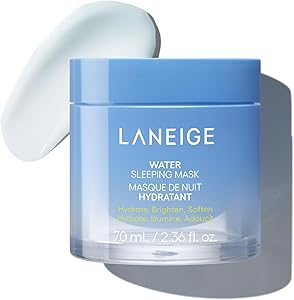
TL;DR: Korean sleeping masks are occlusive leave-on formulas designed for overnight barrier repair and ingredient delivery. Key mechanism: low TEWL environment created by film-forming polymers allows humectants and actives to penetrate more deeply than in rinse-off formats. Best for dry, dehydrated, and compromised skin — 2–3x weekly is typically optimal.
Korean Sleeping Mask Guide: INCI Breakdown and Overnight Barrier Repair (2026)
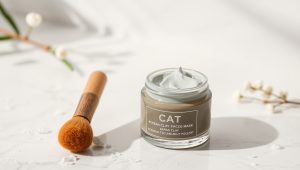
The Korean sleeping mask (수면팩, sumyeon pack) is one of the most distinctively Korean skincare innovations — a category that doesn’t map cleanly onto Western night cream, overnight mask, or leave-on treatment classifications. Understanding what makes a korean sleeping mask formulation unique requires looking at the three-layer ingredient architecture that defines the best examples of the category.
As an Amazon Associate we earn from qualifying purchases at no extra cost to you.


This guide covers INCI architecture, active ingredient analysis, skin type selection, and correct application protocols for maximizing overnight repair results.
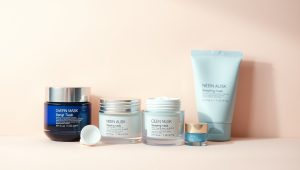
Top Picks at a Glance


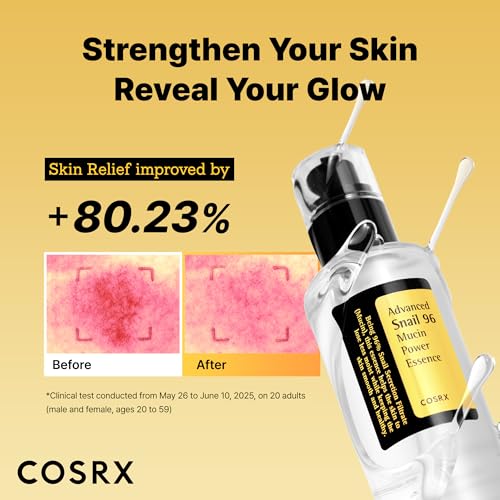


As an Amazon Associate we earn from qualifying purchases. Product prices and availability are accurate as of the date/time indicated.


As an Amazon Associate we earn from qualifying purchases. Product prices and availability are accurate as of the date/time indicated.




As an Amazon Associate we earn from qualifying purchases. Product prices and availability are accurate as of the date/time indicated.
Three-Layer INCI Architecture of Korean Sleeping Masks
The most effective Korean sleeping masks are built in three functional layers visible in the INCI list:
Layer 1: Humectant Base
High-concentration water-binding agents that draw moisture into the stratum corneum throughout the night:
- Glycerin (5–15%): The most effective single humectant in dermatological literature. Improves stratum corneum hydration dose-dependently.
- Sodium Hyaluronate (0.1–2%): Low molecular weight variants penetrate to deeper epidermal layers; high MW creates a surface hydration film.
- Sodium PCA: Natural moisturizing factor (NMF) component; highly hygroscopic and skin-identical.
- Betaine: Osmolyte that protects skin cells under low-humidity overnight conditions.
Layer 2: Functional Actives
Bioactive ingredients that perform targeted repair during the skin’s nocturnal regenerative cycle (peak cell turnover: 11pm–3am):
- Niacinamide: Barrier ceramide synthesis stimulation; also reduces TEWL independently of occlusion.
- Adenosine (0.04%): Korean regulatory-approved anti-wrinkle active. Upregulates procollagen Type I synthesis overnight.
- Centella Asiatica Extract / Madecassoside: Anti-inflammatory and collagen-stimulating. Particularly effective in the low-stress overnight environment.
- Galactomyces Ferment Filtrate: Fermentation-derived brightening active; improves luminosity with consistent overnight use. See our in-depth piece on Korean fermented essence and galactomyces for full analysis.
Layer 3: Occlusive Film Formers
The definitive characteristic of sleeping masks versus regular night creams. These create a semi-permeable film that reduces TEWL without full occlusion:
- Carbomer / Carbopol: Creates a gel matrix that maintains actives in contact with the skin surface overnight.
- Xanthan Gum / Hydroxyethylcellulose: Natural film formers with good skin feel and stability.
- Dimethicone: Silicone-based partial occlusion; reduces TEWL by ~20–40% without the comedogenic risk of heavier waxes.
- Squalane: Skin-identical emollient with mild occlusive effect; non-comedogenic and appropriate for acne-prone users.
INCI & Spec Reference Table
| Ingredient Category | Key INCI Examples | Function in Sleeping Mask | Look For |
|---|---|---|---|
| Primary humectant | Glycerin, Betaine | Draw water into SC overnight | Top 5 INCI positions |
| Secondary humectant | Sodium Hyaluronate, Sodium PCA | Multi-depth hydration | Both LMW and HMW forms |
| Barrier active | Niacinamide, Ceramide NP | Stimulate ceramide synthesis | Above preservative line |
| Anti-aging active | Adenosine, Retinyl Propionate | Collagen upregulation | Regulatory-approved concentrations |
| Film former (occlusive) | Carbomer, Dimethicone, Xanthan Gum | Reduce TEWL, lock in actives | Present in at least one form |
Sleeping Mask vs. Night Cream: The Real Difference
The distinction is formulation intent and texture architecture:
- Night cream: Rich emulsion base; heavier lipid fraction (shea butter, oils, waxes). High occlusion. Designed to replace all previous moisturizing steps. Richer texture typically not suitable for oily skin.
- Sleeping mask: Applied as a final layer over a full routine. Gel or lightweight cream texture. Film-forming rather than fully occlusive. Works synergistically with layers applied underneath — it seals the system rather than replacing it. Suitable for all skin types when correctly matched.
For context on how sleeping masks fit into a full routine architecture, see the Korean double cleansing method — a clean canvas is prerequisite for effective sleeping mask absorption.
Frequency and Application Protocol
Korean skincare practice treats sleeping masks as a boosting treatment, not a nightly requirement:
- Normal / Combination skin: 2–3x per week, alternating with regular moisturizer on other nights
- Dry / Dehydrated skin: 4–5x per week; daily use is appropriate during low-humidity winter months
- Oily / Acne-prone skin: 1–2x per week; select gel-texture formulas with non-comedogenic occlusives (squalane, dimethicone over petrolatum)
- Compromised barrier: Daily use appropriate during active barrier repair phase; pair with a dedicated barrier cream underneath. See Korean barrier creams for skin strengthening for layering options.
Application: apply as the absolute last skincare step — after all serums, treatments, and eye cream. Use a thin even layer; sleeping masks are not designed to be applied in thick deposits. Rinse in the morning with water or a gentle low-pH cleanser.
Frequently Asked Questions
Can I use a Korean sleeping mask every night?
Yes, for dry and dehydrated skin types. Daily use of well-formulated sleeping masks does not cause dependency or reduce the skin’s natural moisture regulation capacity — this is a persistent myth. The skin’s aquaporin and NMF production systems are not suppressed by topical humectants. However, for oily and acne-prone skin, daily occlusion can increase closed comedone formation; alternating with a non-occlusive moisturizer is advisable.
What is the difference between a sleeping mask and a sheet mask?
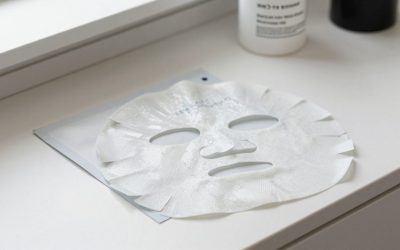
Sheet masks are timed treatments (15–20 minutes) using a soaked cellulose or hydrogel carrier to deliver high concentrations of serum into the skin via brief occlusion. Sleeping masks are leave-on formulations designed for 6–8 hours of continuous contact, using a film-forming base rather than a carrier sheet. Delivery mechanisms, ingredient concentrations, and use cases are entirely different. For a guide to the best timed masks, see our best Korean sheet masks for 2026.
Why does my sleeping mask pill when applied over other products?
Pilling results from incompatible polymer interactions between the sleeping mask’s film formers and ingredients in the layers below. Most commonly: carbomer-based sleeping masks pill over silicone-heavy serums or essences. Solutions: allow each layer to fully absorb before applying the next (3–5 minutes minimum), use a hydrating toner to create a compatible base layer, or switch to a non-carbomer sleeping mask (xanthan gum or hydroxyethylcellulose base).
Can I use a sleeping mask with retinol or AHA in my evening routine?
Yes, but sequencing matters. Apply the exfoliating or retinoid active before the sleeping mask — never mix them into it. The occlusion created by the sleeping mask increases penetration of whatever is applied underneath, which enhances efficacy but also increases irritation risk with potent actives. Start with lower retinol concentrations on nights you apply a sleeping mask. Avoid high-concentration AHAs (10%+) under occlusion unless your skin is adapted to that active.
Is a sleeping mask necessary if I already use a rich night cream?
Not necessary — but they serve different functions. A rich night cream is a comprehensive moisturizing step. A sleeping mask adds a distinct film-forming layer over an already-complete routine to further reduce overnight TEWL. If your night cream contains occlusive agents (petrolatum, beeswax, shea butter) in the top INCI positions, it already provides substantial occlusion and a sleeping mask adds marginal benefit. If your routine ends with a lightweight gel or emulsion, a sleeping mask provides meaningful additional protection.
Ingredient Combinations to Prioritize
The best Korean sleeping masks layer these specific pairings for compounding overnight benefit:
- Glycerin + Sodium Hyaluronate + Carbomer: Classic moisture-sealing trio; maximum hydration and film formation
- Niacinamide + Ceramide + Adenosine: Barrier repair + collagen support; best for aging or compromised skin
- Centella Asiatica + Panthenol + Allantoin: Soothing-repair triad; ideal for post-procedure or sensitized skin
- Galactomyces Ferment + Niacinamide: Brightening-focused combination; overlaps with brightening serum territory for a double-hit approach
Winter vs. Summer Use
Sleeping mask frequency should adjust seasonally. In low-humidity winter environments (indoor heating further desiccates air), TEWL increases significantly overnight — daily sleeping mask use is justified even for normal skin. In humid summer conditions, reduce frequency and consider gel-texture formulas to prevent congestion. Our Korean winter dry skin routine covers the full seasonal adjustment strategy.
Final Verdict
Korean sleeping masks are a genuinely distinct and functional skincare category. When selected correctly — matched to skin type, with a well-constructed three-layer INCI architecture, and applied as the final sealing step over a complete routine — they deliver measurable overnight barrier reinforcement and cumulative active ingredient benefits that lighter moisturizers cannot replicate. Use 2–5 nights per week depending on skin type, adjust seasonally, and allow time for the biochemical actives to accumulate results over 6–12 weeks.