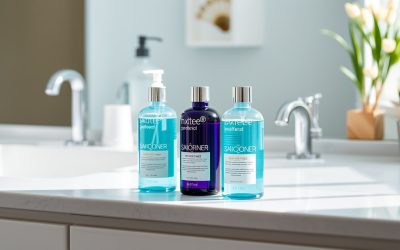
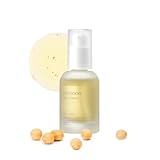
- Top Pick: mixsoon Bean Essence Korean Skin Care, Gentle AHA Exfoliating Essence for Glass Skin Glow, Hydrating Face Serum with Fermented Bean, Smooth Skin, 30ml / 1.01 fl.oz. Korean Glass Skin Care
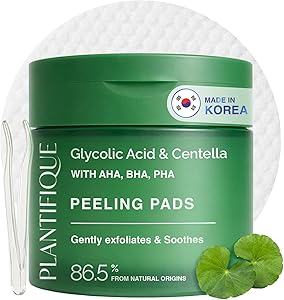
- Best Value: MANYO Galactomy Enzyme Peeling Gel, Gentle Face Exfoliator, 2.5 fl oz
- Premium Choice: Beauty of Joseon Green Plum AHA BHA Toner Refreshing Facial Essence Moisturizer Mild Exfoliating Salicylic Acid for All Skin Types, Korean Skin Care for Men Women 150ml 5.27 fl.oz
TL;DR: Korean chemical exfoliant essences occupy a unique hybrid format — lower acid concentrations than standalone AHA/BHA treatments, formulated at pH 3.2–4.5, and paired with hydrating and soothing actives to deliver continuous gentle exfoliation without the barrier disruption of weekly peel products. Best used as the first active step after cleansing, 4–7 nights per week depending on skin tolerance.
- Top Picks at a Glance
- Acid Types in Korean Chemical Exfoliant Essences
- INCI and Specification Reference Table
- How to Use Korean Exfoliant Essences Correctly
- Building Tolerance: The Korean Approach to Introducing Acids
- Combining Korean Exfoliant Essences with Other Actives
- Frequently Asked Questions
- Final Verdict
Korean Chemical Exfoliant Essence: INCI-Level Guide to Exfoliating Toners in 2026
The Korean chemical exfoliant essence — sometimes marketed as an exfoliating toner, acid toner, or clarifying essence — is one of K-beauty’s most effective and misunderstood formats. Unlike Western chemical exfoliant treatments (typically 10–30% AHA at pH 3.0–3.5 used once or twice weekly), Korean exfoliant essences use lower acid concentrations (2–10% AHA, 0.5–2% BHA, or 5–10% PHA) at a slightly higher but still active pH (3.2–4.5), combined with hydrating humectants, fermented actives, and soothing botanical extracts.
As an Amazon Associate we earn from qualifying purchases at no extra cost to you.


This formulation philosophy reflects a core Korean skincare principle: continuous low-level exfoliation is more effective and less damaging than periodic high-strength exfoliation. By keeping acid concentrations moderate and pairing them with barrier-supportive ingredients, Korean exfoliant essences can be used daily or near-daily without the sensitivity, peeling, and barrier compromise that comes with high-dose acid treatments. The result is progressive cell turnover normalization rather than acute surface ablation.
Top Picks at a Glance




As an Amazon Associate we earn from qualifying purchases. Product prices and availability are accurate as of the date/time indicated.





As an Amazon Associate we earn from qualifying purchases. Product prices and availability are accurate as of the date/time indicated.




As an Amazon Associate we earn from qualifying purchases. Product prices and availability are accurate as of the date/time indicated.
Acid Types in Korean Chemical Exfoliant Essences
Korean exfoliant essences use five main acid classes, each with distinct mechanisms and skin type suitability:
- AHA (Alpha Hydroxy Acids) — Glycolic, Lactic, Mandelic: Water-soluble acids that exfoliate at the desmosomes binding corneocytes in the stratum corneum. Glycolic acid (Glycolic Acid, smallest molecular weight) penetrates deepest and acts fastest. Lactic acid (Lactic Acid) is gentler, naturally hydrating (humectant properties), and better for dry or sensitive skin. Mandelic acid (Mandelic Acid, largest AHA molecular weight) has the slowest penetration and is the most tolerable AHA for rosacea-adjacent and sensitized skin.
- BHA (Beta Hydroxy Acid) — Salicylic Acid: Oil-soluble, penetrates sebaceous follicles directly. Salicylic Acid at 0.5–2% is the standard Korean BHA dose — lower than US OTC acne products (up to 2%) but effective for daily use on oily and acne-prone skin without chronic barrier disruption. EU-regulated Korean products cap at 2% leave-on.
- PHA (Polyhydroxy Acids) — Gluconolactone, Lactobionic Acid: Large-molecule acids that exfoliate more superficially, hydrate simultaneously, and are well-tolerated by sensitive and compromised skin. Gluconolactone and Lactobionic Acid are the most common Korean PHA actives — suitable for daily use and compatible with active sensitization.
- LHA (Lipo-Hydroxy Acid): A lipophilic salicylic acid derivative that exfoliates more selectively within the follicle than standard BHA, with lower systemic absorption and less surface irritation. Used in Korean essences targeting blackheads and enlarged pores.
- Willow Bark Extract (Salix Alba Bark Extract): A natural source of salicin, a salicylate precursor with gentler exfoliant action than synthetic salicylic acid. Common in Korean “clean” or botanical-focused exfoliant essences.
INCI and Specification Reference Table
| Acid Type | INCI Name | Effective % Range | Active pH Range | Best Skin Type | Use Frequency |
|---|---|---|---|---|---|
| Glycolic AHA | Glycolic Acid | 5–10% | 3.0–4.0 | Normal, oily, resilient | 2–4x/week |
| Lactic AHA | Lactic Acid | 5–10% | 3.5–4.5 | Dry, sensitive, aging | 4–7x/week |
| Mandelic AHA | Mandelic Acid | 5–10% | 3.5–4.5 | Sensitive, reactive, rosacea | Daily |
| BHA | Salicylic Acid | 0.5–2% | 3.0–4.0 | Oily, acne-prone, congested | Daily–5x/week |
| PHA | Gluconolactone, Lactobionic Acid | 5–10% | 3.5–5.0 | All, esp. compromised barrier | Daily |
| LHA | Capryloyl Salicylic Acid | 0.1–0.3% | 4.0–5.0 | Oily, pore-focused | Daily |
How to Use Korean Exfoliant Essences Correctly
Application method significantly affects exfoliant essence efficacy. Apply immediately after cleansing — the acid works on a clean, makeup- and SPF-free surface. Use a cotton pad for AHA and BHA essences to ensure even distribution and light physical assistance; use fingertips for PHA and LHA essences, which require gentler application. Apply in upward strokes across the full face, including jaw and neck if post-breakout marks extend there.
Wait 15–20 seconds before the next product — acid activity requires brief contact time before the pH is buffered upward by subsequent layers. Follow with a hydrating toner or essence (no actives), then serums, then moisturizer. Never apply a foaming cleanser or physical exfoliant in the same routine step as an acid essence — the combination amplifies irritation without improving exfoliation.
Pair with a correctly pH-matched cleanser for maximum efficacy — see our guide on Korean foaming cleansers for how cleanser pH affects the starting pH of your skin before acid application.
Building Tolerance: The Korean Approach to Introducing Acids
Korean skincare does not advocate for the “purging through discomfort” approach common in Western acid culture. The recommended introduction protocol: start with PHA or low-dose lactic acid (5%) two nights per week for two weeks. If no sensitivity develops, increase to four nights per week. Progress to glycolic or salicylic acid only after the lower-strength acid is tolerated at daily use. This graduated approach maintains barrier integrity while progressively normalizing cell turnover — and produces faster sustained results than jumping to high-strength acids that trigger reactive periods.
For skin types already using physical exfoliation (Korean exfoliating toner pads), transitioning to a chemical exfoliant essence is straightforward — see our guide on Korean exfoliating toner pads for how to swap or layer both formats.
Combining Korean Exfoliant Essences with Other Actives
Acid essences are highly compatible actives when sequenced correctly. Niacinamide: apply after the acid step — niacinamide at the elevated pH of a moisturizer or toner applied after your acid does not cause flushing and provides anti-pigmentation benefit that amplifies the brightening effect of the AHA. Retinol: use acid essence on non-retinol nights or in the AM if retinol is used exclusively PM — do not layer both in the same routine for skin new to acids.
Avoid same-routine pairing with: high-concentration Vitamin C (L-ascorbic acid below pH 3.0) — double-acid stacking at low pH increases irritation without synergistic benefit; physical scrubs — redundant and barrier-disrupting; alkaline clay masks — pH mismatch deactivates the acid. For the full routine architecture around acids in a K-beauty protocol, our Korean PHA exfoliant guide covers gentle daily-use acid integration in detail.
Frequently Asked Questions
What is the difference between a Korean exfoliating toner and a chemical exfoliant essence?
The terms are used interchangeably in Korean skincare marketing, but there are formulation differences. An exfoliating toner typically has a thinner, more watery consistency, is applied with a cotton pad, and relies primarily on the acid for effect. A chemical exfoliant essence has a slightly thicker consistency, may be applied with fingertips, and typically contains a more developed hydrating and soothing base alongside the acid. Both deliver chemical exfoliation; essences tend to be gentler and more suitable for daily use due to their higher supporting-ingredient load. The “toner” designation is more a marketing convention than a strict formulation category in Korean cosmetics.
Can I use a Korean chemical exfoliant essence every day?
PHA-based Korean exfoliant essences are designed for daily use — their large molecular weight limits penetration depth and barrier disruption, and their inherent humectant activity offsets any drying effect. Low-dose lactic acid (5%) is also suitable for daily use in most skin types after a 2–4 week tolerance-building period. Glycolic acid at 7%+ and salicylic acid at 1–2% are best used every other day or 3–5 times per week for most skin types. Any acid essence used daily requires consistent SPF use in the AM — AHAs increase UV sensitivity for 24–48 hours after application by thinning the stratum corneum.
How do I know if a Korean chemical exfoliant essence is actually working?
Positive signs at 2–4 weeks: skin texture smoother to the touch, foundation applies more evenly, post-breakout marks fading faster than before use, pores appearing less congested, overall tone more even. Negative signs indicating over-exfoliation: persistent redness not present before use, increased sensitivity to other products previously well-tolerated, skin feels tight or reactive after cleansing, and “stinging” that extends beyond the first 30 seconds of application. If negative signs appear, reduce frequency to twice weekly and increase barrier support (ceramide moisturizer, no additional actives until recovery).
Should I use a Korean chemical exfoliant in the AM or PM?
PM use is standard practice and has two advantages: no UV sensitivity risk in the same session, and acid activity can work undisturbed for 6–8 hours without being buffered by subsequent SPF application. AM use is not contraindicated for PHA and low-dose lactic acid if SPF 50+ is applied afterward, but the practical benefit is lower since cell turnover is naturally slower during daylight hours. Glycolic acid and salicylic acid at functional concentrations are best reserved for PM use exclusively. Never use an acid essence immediately before outdoor sun exposure without SPF.
What is “skin purging” and does it happen with Korean chemical exfoliant essences?
Purging — a temporary increase in breakouts when introducing a new exfoliant — occurs because accelerated cell turnover pushes existing microcomedones to the surface faster than usual. It is a real phenomenon confined to the first 2–4 weeks of use, typically appearing in areas where you already experience congestion. True purging resolves as the existing backlog clears; new breakouts in areas that were previously clear, or breakouts persisting beyond 4–6 weeks, indicate a reaction or incompatibility rather than purging. Korean low-dose exfoliant essences produce milder purging than high-strength peels due to their lower acceleration of turnover — a key advantage of the continuous low-dose approach.
Final Verdict
Korean chemical exfoliant essences offer the most practical daily exfoliation format in the K-beauty system — effective acid concentrations at active pH levels, combined with hydrating and soothing co-ingredients that make consistent use achievable without barrier compromise. Match acid type to skin type (PHA for sensitive, lactic for dry, glycolic for resilient, BHA for oily/acne-prone), verify the pH is below 4.5 for functional exfoliation, and follow the graduated introduction protocol. Consistent use over 8–12 weeks produces texture, tone, and clarity improvements that no physical scrub or single weekly peel can match.
For a comprehensive K-beauty product overview spanning cleanser through SPF, see our best Korean skincare products for 2026 roundup.