Last updated: November 23, 2026
Disclosure: As an Amazon Associate, I earn from qualifying purchases.
A tinted sunscreen serum sits in the narrow space between skincare and makeup: a fluid, often dropper-dispensed formula that carries broad spectrum SPF plus just enough pigment to even out the look of skin tone. It is a different product class from a tinted moisturizer, which is a cream first and a sunscreen second, and from a standard tinted sunscreen lotion, which usually has a thicker, more opaque texture. Serum formats spread thin, layer cleanly over a morning routine, and leave a skin-like finish rather than a made-up one.
That thinness is also the format’s honest weakness. A few drops will not deliver the SPF printed on the bottle, because SPF ratings are measured at a standard application amount of 2 mg per square centimeter of skin. For the face and neck, that works out to roughly two finger lengths of product. Every pick below can do its job, but only at that dose. The tint itself evens appearance; it is not extra protection, and no tint adds to the labeled SPF.
How to Choose
Filter type. Most serum tints are mineral, built on zinc oxide, because mineral filters suit the sheer, blendable textures this format is known for. Chemical formulas exist too and can feel even more weightless, with no risk of a white cast. Neither type protects better when applied at the full amount; choose based on your skin’s tolerance and how the finish looks on your skin tone.
SPF level. SPF 30 is the usual floor for daily wear, and most picks here are SPF 40 or SPF 50. Higher numbers help partly because they leave more margin when real-world application falls a little short, but they never excuse a thin layer.
Shade range and undertone. A tint only looks natural if the shade and undertone match. Ranges vary from a handful of flexible, color-adapting shades to lineups of 30. If you fall between shades, the deeper one usually reads more natural in sheer formulas, because the coverage is translucent.
Finish and coverage. Expect light coverage at most. These products blur and even; they do not conceal the way a foundation does. Finishes run dewy to natural, and oily skin types may prefer the more satin options or a light powder over the T-zone.
Format and layering. Droppers give precise control but make the full two-finger dose slower to dispense; pumps and tubes are faster. Apply the serum as the last skincare step, after moisturizer has absorbed, and give it a few minutes to set before makeup.
The 5 Best Tinted Sunscreen Serums
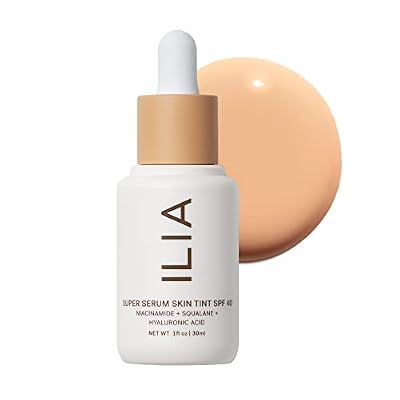
1. ILIA Super Serum Skin Tint SPF 40
Specs
- SPF 40, broad spectrum, mineral zinc oxide filters
- 1 fl oz (30 ml) dropper bottle
- 30 shades across undertones
- With niacinamide, plant-based squalane, and hyaluronic acid
- Light coverage, dewy finish; non-comedogenic and vegan
The product that defined this category, ILIA’s Super Serum Skin Tint is a true serum texture: runny, dropper-dispensed, and sheer enough that skin shows through. The 30-shade range is the widest here, which matters in a format where the tint has to disappear into your own tone. The finish is distinctly dewy, so it flatters normal to dry skin and can look shiny on oily skin by midday. Because the texture is so fluid, measure out the full amount rather than counting drops.
2. Supergoop! Protec(tint) Daily SPF Tint SPF 50

Specs
- SPF 50, broad spectrum
- 1.18 fl oz (35 ml) tube
- 14 flexible shades
- With hyaluronic acid and ectoin
- Light, buildable coverage with a natural finish
Protec(tint) is the pick for anyone who finds mineral tints chalky. Its coverage is the most buildable of the five, so a second thin layer over areas that need more evening-out still looks like skin. The natural finish sits between matte and dewy, which makes it the easiest recommendation for combination skin. The shade system uses depth plus undertone codes, so read the code rather than guessing from the shade name alone.
3. Odacité SPF 50 Flex-Perfecting Mineral Drops Tinted Sunscreen

Specs
- SPF 50, broad spectrum, mineral zinc oxide filters
- 1 fl oz (30 ml) dropper bottle
- Flex-Perfecting shades with color-adapting pigments
- With niacinamide and green tea
- Sheer coverage with a natural, skin-like finish
Odacité’s drops take a different approach to shade matching: instead of a long shade list, the pigments are designed to flex across a band of skin tones, which simplifies choosing but gives less precision at the deepest and fairest ends. The texture is a silky serum that sets down more than the ILIA, so it suits normal to combination skin that wants less shine. Niacinamide and green tea round out a formula aimed at skin that looks uneven or reactive.
4. Naked Sundays CabanaGlow Sheer Tint Serum Drops SPF 50

Specs
- SPF 50, broad spectrum, non-nano zinc oxide 14.9%
- Dropper bottle serum format
- With hyaluronic acid and skin-perfecting pigments
- Sheer tint with a glowy finish
- Fragrance-free formula
CabanaGlow is the glow-first option: sheer tint, a luminous finish, and a dropper format meant to be worn alone on bare-skin days. The 14.9% non-nano zinc oxide is a respectable filter load for such a fluid product. The sheer tint range is flexible rather than exact, so treat it as a tone-evening glow rather than a shade-matched base. Dry skin will appreciate the hyaluronic acid; very oily skin may find the glow too much by afternoon.
5. Live Tinted Hueguard Skin Tint SPF 50

Specs
- SPF 50, broad spectrum, non-nano zinc oxide 13.2%
- 1.35 fl oz (40 ml) tube
- Water and sweat resistant (80 minutes)
- Light-to-medium buildable coverage, radiant finish
- Formulated for a no-white-cast result across skin tones
Hueguard earns its place on two practical points: the largest tube here, and 80 minutes of water and sweat resistance, which most serum tints do not offer. Coverage runs a step higher than the rest, into light-medium, and the shade development focused on medium to deep tones that mineral tints often leave with a cast. It is the most sunscreen-like of the five in behavior, so it is the natural choice for days spent mostly outdoors.
Usage Notes
Dose is everything with this format. Squeeze or draw out two finger lengths of product for your face and neck, and apply it in sections so the layer stays even. With dropper bottles, that is far more than a few drops; if the amount surprises you, that is normal, and it is the amount the SPF rating assumes.
Apply the serum after moisturizer and before makeup, then let it set for several minutes. Pressing makeup on too soon can shift the sunscreen layer and leave patchy coverage in both. Do not mix the serum into foundation or moisturizer to stretch it: diluting changes the film the filters form and the protection drops in ways you cannot predict.
Reapply roughly every two hours outdoors, and sooner after swimming or heavy sweating unless the label states a water-resistance time. Over makeup, reapplication is the weak point of every tint; a fresh, careful layer patted on with clean fingers disturbs makeup least. Shake dropper bottles before use, since pigments settle.
FAQ
Can a tinted sunscreen serum replace my regular sunscreen?
Yes, on ordinary days, provided you apply the full standard amount and reapply on schedule. On long, high-exposure days, many people do better with a dedicated sunscreen applied generously, using the tint only as a finishing layer, because tint products invite thin application.
How much tinted sunscreen serum should I use?
About two finger lengths for the face and neck together. That is the practical version of the 2 mg per square centimeter used in SPF testing. Using half that amount does not give half the SPF; protection falls off much faster than the dose does.
Does the tint itself add sun protection?
No. The pigment evens the appearance of skin tone, and that is all it is rated to do. Protection comes only from the UV filters at the labeled SPF, applied at the full amount. A deeper tint is a cosmetic choice, not a stronger sunscreen.
Can I wear makeup over a sunscreen serum?
Yes. Let the serum set for a few minutes first so the filter film forms undisturbed, then apply makeup with a pressing or stippling motion rather than dragging. Keep in mind that powder and foundation on top do not add to the SPF underneath.
Mineral or chemical: which is better in a serum tint?
Both protect when applied fully. Mineral zinc oxide formulas dominate this format and start working as soon as they are on, but can leave a cast on deeper tones if the tint is poorly matched. Chemical formulas feel lighter and never cast, though some skin finds them less comfortable around the eyes.
Conclusion
Tinted sunscreen serums earn their place when you want one step that evens tone and carries real SPF, and all five picks here do that in genuinely serum textures, from ILIA’s dewy 30-shade original to Live Tinted’s water-resistant Hueguard. The format’s one rule is non-negotiable: apply the full two finger lengths and reapply outdoors, because a tinted serum worn thin is mostly tint. Choose by finish and shade range, dose it like a sunscreen, and it will do both jobs honestly.