Last updated: September 26, 2026
With perioral dermatitis, the cleanser you use matters less for what it does than for what it avoids. The rash of small red or skin-coloured bumps around the mouth and nose is aggravated by irritants, heavy residues and certain ingredients that turn up in everyday products, including some that are not skincare at all. A clinician usually needs to diagnose and treat it, most often with topical metronidazole, azelaic acid or ivermectin, or oral anti-inflammatory antibiotics for wider cases. Alongside that, a very gentle cleanser and a few habit changes can shorten flares.
What to look for in a cleanser
- Fragrance-free and dye-free: fragrance is a common irritant and allergen.
- Low or non-foaming: strong foaming agents can strip and irritate already reactive skin.
- Free of sodium lauryl sulfate (SLS): a harsh surfactant that some clinicians suspect in perioral dermatitis.
- No acids, scrubs or exfoliating beads during a flare.
- Rinses cleanly, without leaving an oily film around the mouth.
Commonly suggested examples include Vanicream Gentle Facial Cleanser, La Roche-Posay Toleriane Hydrating Gentle Cleanser and Cetaphil Gentle Skin Cleanser, generally $10–$18; check current price. Some people do best simply rinsing with lukewarm water once a day during a flare and using cleanser only in the evening.
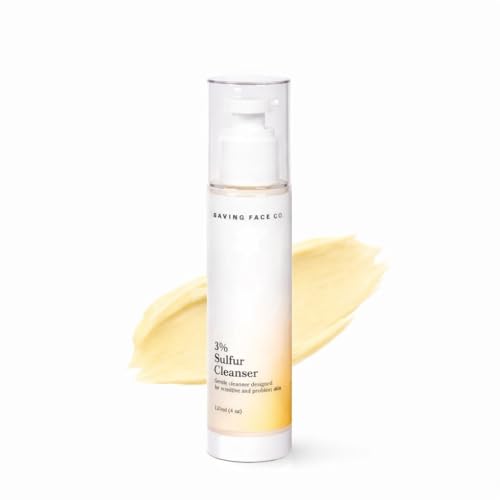
Saving Face Co. 3% Sulfur Cleanser - Gentle Facial Cleanser with Sulfur, Colloidal Oatmeal, Sweet Almond Oil + Glycerin for Perioral Dermatitis-prone & Rosacea-prone skin (4 Fl Oz)
Included for 'Cleanser for Perioral Dermatitis: Gentle Washing and Hidden Triggers' because the listing specifies Gentle Facial Cleanser with Sulfur and Colloidal Oatmeal, details this guide uses to compare options.
View on Amazon
Avène XeraCalm A.D Lipid-Replenishing Cleansing Oil, 13.5 oz
Included for 'Cleanser for Perioral Dermatitis: Gentle Washing and Hidden Triggers' because the listing specifies 13.5 oz, details this guide uses to compare options.
View on AmazonEveryday products that touch the rash
The mouth area comes into contact with far more than your cleanser. These are worth reviewing with your clinician:
| Product | Possible issue | What to try |
|---|---|---|
| Toothpaste | Fluoride and SLS are suspected triggers for some people | Rinse the skin around your mouth after brushing; ask about switching toothpaste |
| Cleansing oils and balms | Can leave a heavy residue | Use a light lotion cleanser or micellar water, then rinse |
| Lip balms and glosses | Spread onto skin around the lips | Apply precisely to the lips only |
| Steroid creams | Can trigger or prolong the rash | Do not use without advice; tell your clinician if you have been using one |
| Steroid inhalers or nasal sprays | Residue around the mouth and nose | Rinse and wipe the area after use; keep using as prescribed |
| Heavy foundation | Occlusion and irritants | Pause during the flare if possible |
How to wash during a flare
- Use lukewarm, not hot, water.
- Apply a small amount of cleanser with fingertips and move gently over the rash for 20–30 seconds.
- Rinse well, making sure no product lingers in the creases beside the nose and mouth.
- Pat dry with a clean, soft towel. Change hand towels often.
- Apply any prescribed treatment as directed. If you need moisturizer, choose a minimal lotion and use it sparingly.
What about sulfur or zinc washes?
Some clinicians suggest sulfur or zinc-containing cleansers as an addition for perioral dermatitis, based on their anti-inflammatory properties. They can be drying and have a distinctive smell. Treat them as something to discuss with your clinician, not a replacement for diagnosis and treatment.
Other contact points worth checking
Wash pillowcases twice a week during a flare, as they collect residue from hair products and skin creams. Try not to rest your chin on your hand, and wipe phone screens that press against the lower face. If a flare began soon after you started any new product that touches the mouth area, such as a flavoured lip product or a new toothpaste, mention the timing to your clinician.
When to get help quickly
See a clinician if the rash spreads to the eyelids, becomes painful, weeps or crusts, or if you are pregnant, since treatment choices change. In children, the rash is often linked to steroid creams or inhalers and should be assessed rather than treated at home. Yellow crusting or rapid spreading may indicate an infection that needs different treatment.
Recovery timeline
With appropriate treatment and gentle care, most flares improve over four to eight weeks. The rash may briefly look worse after stopping steroid creams or cutting back heavy products, which can be discouraging but is usually temporary. Once clear, keep the routine simple and reintroduce products slowly.
Frequently asked questions
Is it better to use no cleanser at all?
During a flare, some people do well rinsing with water in the morning and using a gentle cleanser only at night. There is no need to stop cleansing completely; a mild, fragrance-free wash is unlikely to aggravate the rash.
Can I use micellar water around my mouth?
Many people tolerate fragrance-free micellar water well, especially for removing sunscreen. Rinse afterwards to avoid leaving surfactant residue on the skin.
Bottom line
For perioral dermatitis, pick a fragrance-free, SLS-free, low-foaming cleanser, wash gently with lukewarm water, and rinse thoroughly. Look beyond skincare to toothpaste, lip products, inhaler residue and steroid creams, and let a clinician guide treatment. Gentle and consistent is what lets the rash settle.