Last updated: October 4, 2026
- What Is Snail Mucin? How Does It Work?
- What Is Hyaluronic Acid? How Does It Work?
- Key Differences: Snail Mucin vs Hyaluronic Acid
- Which Is Better for Your Skin Concern?
- Can You Use Both Together?
- Best Snail Mucin Products
- Best Hyaluronic Acid Products
- Frequently Asked Questions
- Different Concerns, Both Worth It
- Related Articles
- Related Guides
As an Amazon Associate we earn from qualifying purchases at no extra cost to you.




Snail Mucin vs Hyaluronic Acid: Which Serum Does Your Skin Actually Need?
| Criteria | Snail Mucin | Hyaluronic Acid |
|---|---|---|
| Primary Function | Repair, barrier regeneration, multi-benefit hydration | Humectant hydration, plumping, moisture retention |
| Texture | Slightly viscous, gel-like, minor slip | Watery to lightweight gel, fast-absorbing |
| Best For | Damaged barrier, aging, acne marks, overall repair | Dry, dehydrated, all skin types needing hydration |
| Concerns Treated | Scarring, fine lines, uneven texture, slow healing | Dryness, tightness, flakiness, surface dehydration |
| Layering Order | After HA (step 4–5) | Before snail mucin (step 3–4) |
Two ingredients dominate K-beauty serum conversations more than any others: snail mucin and hyaluronic acid. Both are celebrated, both are widely available, and both show up in countless top-rated Korean skincare products. So when someone is standing in front of their screen, credit card in hand, trying to decide between the two — the confusion is completely understandable.
They sound nothing alike. One comes from garden snails. The other is a molecule your body already makes. Yet they’re frequently mentioned together, often used together, and sometimes confused for each other. This guide breaks down exactly how each one works, what separates them, and which one — or combination — your skin actually needs right now.
🛒 Best Price Today on Amazon
Prime members get fast, free shipping on everything above, plus member-only deals. New members get a 30-day free trial — cancel anytime.
What Is Snail Mucin? How Does It Work?
Snail mucin refers to the secretion filtrate produced by snails — specifically Helix aspersa — when they move across a surface. In skincare, this secretion is harvested humanely, filtered, and concentrated into formulas ranging from 92% to 96% purity. The appeal is in its complexity: snail mucin isn’t a single molecule. It’s a cocktail of biologically active compounds, each doing something distinct for your skin.
Key Active Components in Snail Mucin
- Glycoproteins: Proteins bonded to carbohydrates that support cell communication and tissue regeneration. They signal your skin to repair itself more efficiently — useful after acne, sun damage, or any disruption to the skin surface.
- Growth Factors: Peptide-like signals that encourage cell turnover and collagen synthesis. Growth factors are a major reason snail mucin is associated with anti-aging benefits and scar fading.
- Allantoin: A small, well-studied molecule with powerful soothing and healing properties. It accelerates cell renewal, reduces irritation, and helps normalize skin that’s been stressed. It’s one of the most skin-friendly ingredients in formulation.
- Hyaluronic Acid (naturally present): Yes — snail mucin naturally contains hyaluronic acid. This contributes to its hydrating effect and helps explain why snail mucin feels moisturizing even without added HA in the formula.
- Zinc and Copper Peptides: Trace minerals that support wound healing, reduce inflammation, and assist in collagen production.
The result of all these components working together is a serum that hydrates, repairs, calms, and supports regeneration simultaneously. It doesn’t excel at any single task the way a dedicated active does, but its breadth of action makes it extraordinarily versatile — and forgiving enough for almost any skin type to use.
What Is Hyaluronic Acid? How Does It Work?
Hyaluronic acid (HA) is a glycosaminoglycan — a long-chain sugar molecule — that occurs naturally in the human body. It’s found in the skin, joints, and eyes, where its primary job is to attract and hold water. A single gram of hyaluronic acid can hold up to six liters of water. That capacity for moisture retention is why it’s become one of the most universally used skincare ingredients in the world.
Unlike snail mucin, HA works by a single, clear mechanism: it’s a humectant. It draws moisture from the environment and from deeper skin layers toward the surface, and it holds that moisture in place. The key variable is molecular weight.
Molecular Weight Matters
- High molecular weight HA: Large molecules that sit on the skin’s surface, forming a film that locks in moisture and gives that immediate plump, dewy look. Works fast but stays shallow.
- Low molecular weight HA: Smaller molecules that can penetrate into deeper epidermal layers, hydrating from within and delivering longer-lasting results.
- Micro HA (sodium hyaluronate crosspolymer): The smallest form — penetrates furthest, most effective for structural hydration and lasting plumpness.
The best HA serums (like Torriden DIVE-IN) include multiple molecular weights to hydrate at every skin level simultaneously. A product with only one weight misses the layered approach that makes multi-weight formulas significantly more effective.
HA is vegan, synthetically produced (not animal-derived in modern formulations), universally compatible with other actives, and suitable for every skin type — even oily and acne-prone. It does not clog pores, cause breakouts, or interact negatively with other ingredients.
Key Differences: Snail Mucin vs Hyaluronic Acid
| Factor | Snail Mucin | Hyaluronic Acid |
|---|---|---|
| Hydration Depth | Surface to mid-layer (via natural HA content) | Multi-layer when multi-weight formula is used |
| Repair Ability | Strong — glycoproteins + growth factors drive regeneration | Minimal — hydration supports healing but doesn’t drive it |
| Anti-Aging | Yes — growth factors + collagen signaling | Indirect — plumping reduces appearance of fine lines |
| Texture | Gel-like, slightly thicker, minor tactile slip | Watery to fluid, fast absorbing, no residue |
| Vegan | No — animal-derived (snail) | Yes — synthetically produced |
| Price Range | $20–$35 for quality formulas | $18–$30 for quality multi-weight formulas |
| Breakout Risk | Very low — widely non-comedogenic | Extremely low — non-comedogenic |
Which Is Better for Your Skin Concern?
Dry or Dehydrated Skin: Hyaluronic Acid Wins
If tightness, flakiness, or that parched “sandpaper” feeling is your primary issue, reach for HA first. Its mechanism is precisely matched to the problem: your skin isn’t retaining moisture, and HA solves that directly. Use a multi-weight formula, apply to damp skin, and seal with a moisturizer immediately. Snail mucin will also hydrate, but it’s doing more than you need for pure dryness.
Damaged Barrier or Post-Acne Marks: Snail Mucin Wins
If you’re dealing with post-inflammatory hyperpigmentation, acne scarring, redness from over-exfoliation, or skin that feels constantly reactive, snail mucin’s regenerative compounds are the better tool. The growth factors and glycoproteins work to reset and repair — not just hydrate. HA doesn’t have this mechanism.
Anti-Aging Concerns: Snail Mucin Has the Edge
For fine lines and loss of firmness, snail mucin’s growth factors stimulate collagen more directly than HA’s surface-plumping effect. HA makes skin look fuller immediately; snail mucin helps it become more structurally resilient over time. For serious anti-aging goals, both together make the most sense.
Sensitive or Reactive Skin: Both, With Caution
Both are generally well-tolerated. HA is slightly safer because its mechanism is purely physical (water retention) and it contains no biological actives that could trigger reactions. Snail mucin’s complex protein content does carry a small risk of irritation in highly sensitive individuals. If you’re extremely reactive, start with HA, then introduce snail mucin after your barrier has stabilized.
Acne-Prone Skin: Both Work, HA Slightly Safer
Neither is comedogenic. Both are safe for acne-prone skin. HA keeps skin hydrated without adding any actives that could potentially interact with acne treatments. Snail mucin can help fade post-acne marks and support healing of active breakouts through its allantoin and zinc content.
Can You Use Both Together?
Absolutely — and this is the answer most experienced K-beauty users arrive at. Snail mucin and hyaluronic acid are not competing ingredients. They’re complementary ones. HA handles the hydration infrastructure; snail mucin handles repair and regeneration. Together, they cover more ground than either does alone.
Correct Layering Order
- Cleanse
- Toner — if using an HA toner (like Isntree HA Toner), this counts as your first HA layer
- Hyaluronic Acid Serum — apply to damp skin for best absorption
- Snail Mucin Serum/Essence — slightly thicker, goes on after HA
- Moisturizer — seals everything in
- SPF (morning only)
The logic: HA goes first because it’s the thinnest and needs to be closest to the skin to draw moisture effectively. Snail mucin goes on top because its slightly thicker consistency and repair functions work better as a second layer, locking in the HA and adding its regenerative benefits on top.
Allow 30–60 seconds between layers for each product to absorb before applying the next.
Best Snail Mucin Products
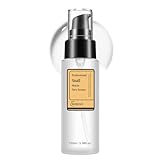
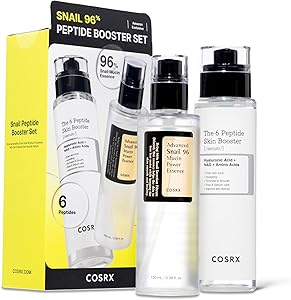
COSRX Advanced Snail 96 Mucin Power Essence
The benchmark product in this category. 96% snail secretion filtrate, minimal ingredient list, fragrance-free, and gentle enough for daily use morning and night. The best-selling Korean serum on Amazon for good reason — it works on almost every skin type without causing issues.
COSRX Advanced Snail 92 All-In-One Cream
For those who prefer a moisturizer-serum hybrid, this formula uses 92% snail secretion filtrate in a cream base. Great for dry skin types who want to consolidate their routine — it works as both a serum and an occlusive moisturizer in one step.
Best Hyaluronic Acid Products
Torriden DIVE-IN Low Molecule Hyaluronic Acid Serum
Five molecular weights of HA in a single formula. Fragrance-free, silicone-free, and suitable for all skin types. This is the standard recommendation for anyone looking to add a dedicated HA serum to their K-beauty routine. Light, effective, and pairs seamlessly with everything.
Isntree Hyaluronic Acid Toner
If you want to add HA at the toner step rather than a separate serum, Isntree’s formula uses multiple HA forms in a lightweight toner base. Apply with hands or a cotton pad after cleansing. It delivers meaningful hydration without requiring another bottle in your lineup — great for those who prefer streamlined routines.
Frequently Asked Questions
Is snail mucin vegan?
No. Snail mucin is derived from the secretions of live snails (specifically Helix aspersa). The harvesting process is generally considered cruelty-free by most brands — snails are not harmed, they secrete naturally when moving across a surface — but the ingredient is not vegan. If a fully plant-based routine is important to you, hyaluronic acid is the better choice.
Does hyaluronic acid cause breakouts?
HA itself is non-comedogenic and does not cause breakouts. However, in very dry climates or when applied to completely dry skin, HA can actually pull moisture out of deeper skin layers rather than drawing it from the environment — leaving skin more dehydrated. The fix: always apply HA to slightly damp skin, and follow immediately with a moisturizer to seal it in.
Which one works faster?
Hyaluronic acid delivers visible results faster. You’ll notice plumping and reduced tightness within hours of first use. Snail mucin’s regenerative benefits — fading of marks, improved texture, firmer skin — take consistent use over four to eight weeks to become clearly visible. Both are worth the investment; their timelines are just different.
Can I use snail mucin in the morning?
Yes. Snail mucin is safe and beneficial in both AM and PM routines. It contains no ingredients that increase photosensitivity. In the morning, use it under SPF. At night, use it as part of your repair-focused routine.
Do I need both if I’m on a budget?
If you can only choose one: pick based on your biggest concern. Dryness → HA. Acne marks, aging, damaged barrier → snail mucin. The COSRX Snail Mucin naturally contains some HA, making it a reasonable compromise if budget is a genuine constraint. But for full results, both together is the right answer.
Different Concerns, Both Worth It
Snail mucin and hyaluronic acid aren’t rivals — they’re teammates addressing different parts of the same goal: healthy, resilient, hydrated skin. Hyaluronic acid delivers hydration quickly and reliably at every skin depth. Snail mucin goes further, supporting the biological processes that repair and regenerate your skin over time.
Most people who commit to K-beauty for more than a few months end up using both. That’s not a marketing coincidence — it’s because the combination genuinely covers more ground than either ingredient alone. Start with whichever addresses your most urgent concern, build your routine from there, and add the second when you’re ready. Your skin will reward the patience.
Related K-Beauty Guides
- Skincare Routine for Beginners: The Complete Step-by-Step Guide
- Best Sunscreen Reapplication Sprays: On-the-Go UV Protection Refresh
- Best Face Steamers for Skincare: Deep Cleanse and Hydrate Your Skin
- Best Derma Rollers for Microneedling: Stimulate Collagen at Home
- Best Face Massage Rollers: Sculpt, Depuff, and Boost Glow
- Best Jade Rollers for Face: Cooling, Depuffing, and Skin-Boosting Benefits
- Best Gua Sha Face Tools: Ancient Ritual for Modern Skin Benefits