Last updated: November 23, 2026
A good pair of tweezers is one of those small tools you only think about when the one in your drawer fails you — slipping off a fine brow hair three times in a row, or snapping a splinter off at the surface instead of pulling it clean. Unlike eyebrow razors, which shave hair off at skin level, tweezers grip the hair and pull it out from the root, so results last longer and the regrowth comes back finer at the tip. The difference between a frustrating tweezer and a reliable one almost always comes down to two things: how precisely the tips meet, and whether the tip shape matches the job. A slant tip is the all-rounder for brow shaping and stray facial hairs, while a sharp point is what you want for splinters, ingrown hairs and anything embedded just under the skin.
This guide compares five well-regarded tweezers across both tip styles — three slants for everyday grooming and two pointed models for splinter and ingrown work — with the specs that actually matter: tip shape, alignment, material and tension.
Disclosure: As an Amazon Associate, I earn from qualifying purchases.
How to Choose Tweezers
Start with the tip shape. Slant tips combine a flat gripping edge with an angled point, which makes them the most versatile choice: the flat side grabs everyday brow hairs, and the pointed corner picks out shorter or finer ones. Point tweezers taper to two fine points and are built for precision tasks — splinters, thorns, ingrown hairs and baby-fine hairs a slant cannot catch. Flat tips exist too, mostly for coarse hairs and false lash application, but most people are better served by owning one good slant and one good point.
Check the alignment. The single best predictor of performance is whether the tips meet evenly along their full edge with no gap and no overlap. Misaligned tips slip, pinch skin, or cut hairs instead of pulling them. Quality brands hand-file or hand-finish their tips to get this right, and it is the main thing you are paying for in a premium pair.
Feel the tension. Tips should close with moderate, even pressure — not so stiff that your hand tires, and not so loose that a gripped hair slides out mid-pull. This “calibrated tension” is hard to judge online, which is why established tool brands with consistent manufacturing are a safer bet than unbranded multipacks.
Mind the material and finish. Stainless steel is the standard: it resists rust, tolerates alcohol wipes, and holds an edge. A matte or textured finish improves grip when your hands are damp from a warm compress. Longer bodies suit larger hands and splinter work; shorter mini sizes are fine for a travel bag but give you less control at the mirror.
The 5 Picks
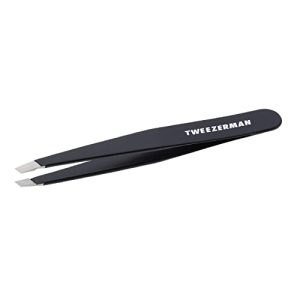
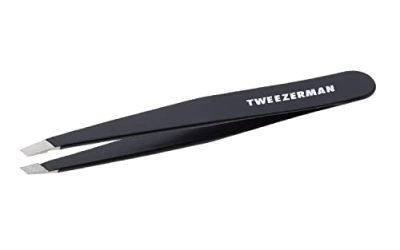
1. Tweezerman Slant Tweezer
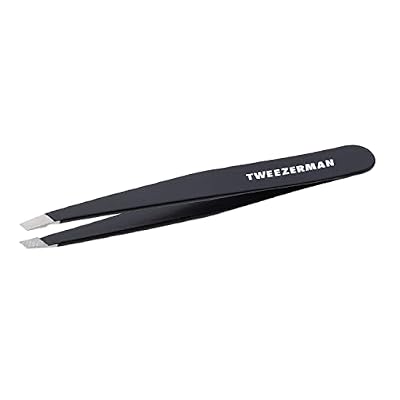
The long-running benchmark for brow shaping. Tweezerman’s slant tips are hand-filed and aligned to close evenly, and the 25-degree angle is the geometry most brow artists default to: flat enough to grab a hair quickly, angled enough to work close to the skin without pinching. The tension is firm but not tiring, which makes it easy to work through a full brow tidy in one session. If you only buy one tweezer for grooming, this is the obvious candidate.
Specs
- Tip style: 25-degree slant, hand-filed
- Material: stainless steel
- Alignment: tips calibrated to close evenly and grip from the root
- Care: wipe tips clean after use; eligible for the maker’s sharpening service
- Best for: everyday brow shaping and stray facial hairs
2. Rubis Classic Slant Tweezer

Rubis has made precision tweezers in Switzerland for decades, originally for watchmaking, and the Classic slant carries that instrument-making heritage. The tips are hand-finished to meet with exact, even closure, and the body has a light spring to it that makes fine hairs easier to catch without extra squeeze. The surgical-grade steel also tolerates disinfection well, which matters if the same tool moves between brow duty and the family first-aid kit.
Specs
- Tip style: slanted, hand-finished for precise closure
- Material: surgical-grade stainless steel
- Model: 1K102, made in Switzerland
- Length: about 3.75 inches
- Best for: fine hairs, precise brow work, and anyone who wants a buy-it-once tool
3. Revlon Expert Slant Tip Tweezers

The dependable drugstore option. Revlon’s Expert slant has precision-aligned tips that close flat, a slightly elongated body that suits a range of hand sizes, and a matte finish that keeps it from sliding around when your fingers are damp. It does not have the hand-finished feel of the premium picks, but for routine brow clean-ups and stray chin hairs it does the job without fuss, and it is easy to replace if it ever gets lost in a move or a suitcase.
Specs
- Tip style: slant, precision-aligned tips
- Material: stainless steel
- Finish: matte, non-slip grip
- Body: elongated shape for control during longer sessions
- Best for: everyday grooming on a sensible budget
4. Tweezerman G.E.A.R. Ingrown Hair SplinterTweezer

This is the pointed specialist to keep with your first-aid supplies rather than your makeup bag. The tips are hand-filed to sharp, tapered points that can get under the end of a splinter or tease out an ingrown hair without digging. Tweezerman’s own guidance is the right technique: start with clean, dry skin, make sure the tips are sanitized, grip the splinter or hair, and pull back in the same direction it entered the skin. The stainless body is slim and easy to maneuver in awkward spots like fingers and feet.
Specs
- Tip style: pointed, hand-filed to sharp tapered points
- Material: stainless steel
- Model: 13041-MG
- Use: splinters, thorns, glass fragments and ingrown hairs
- Care: clean tips with an alcohol wipe or peroxide after each use; not autoclave-safe
- Best for: first-aid kits and stubborn ingrowns
5. Majestic Bombay Fine Point Tweezers

A needle-nose point tweezer with a surgical-tool feel at a modest cost. The long, fine points are aligned to meet at the very tip, so they can isolate a single fine hair or the tip of a thin splinter without grabbing surrounding skin. The black finish makes pale hairs and light wood splinters easier to see against the tool, a small detail that genuinely helps at the bathroom mirror. Keep the protective cap on between uses — fine points this sharp bend if they rattle around loose in a drawer.
Specs
- Tip style: fine point, needle-nose
- Material: surgical-grade stainless steel
- Finish: black
- Length: about 4.3 inches
- Best for: splinters, ticks, ingrown hairs and fine chin or facial hairs
Notes on Use and Hygiene
Clean the tips before and after every use with an alcohol wipe or soap and water, and let them dry before putting them away. This matters most for splinter and ingrown work, where the skin is already broken, but it is a good habit for brow tweezing too — and if more than one person in the household uses the same tweezer, clean it between users.
Technique beats force. For brow and facial hairs, hold the skin gently taut with your free hand, grip the hair close to the root, and pull smoothly in the direction the hair grows. Pulling against the grain or yanking at an angle is what snaps hairs off at the surface. Tweezing after a warm shower, or after holding a warm washcloth to the area for a minute, softens the skin and makes hairs release more easily.
For splinters, wash the area first, clean the tweezer tips, and pull the splinter out back along the angle it went in. If a splinter is deep, has broken off below the surface, or the area becomes increasingly sore or red, that is a job for a pharmacist or clinician rather than more digging at home. Store pointed tweezers with their tip guards on, and never use your good brow slant as a household tool for crafts or electronics — one drop on a tile floor can knock the alignment out for good.
FAQ
Is a slant or point tweezer better for eyebrows?
For general brow shaping, a slant. It grabs hairs quickly and the angled corner handles shorter ones. A point tweezer is better as a second tool for the finest baby hairs and for ingrown work, but it is slower for a full tidy and easier to pinch skin with.
How do I know if my tweezers are misaligned?
Hold them up to the light and squeeze gently. The tips should meet evenly along the whole edge with no visible gap, overlap or sideways twist. If hairs keep slipping out or getting cut in half, misalignment is the usual cause.
Can one tweezer do both brows and splinters?
A good slant can manage a shallow, visible splinter in a pinch, but a dedicated point tweezer is far better at it. Keeping a separate pointed pair in the first-aid kit also means it is clean and sharp when you actually need it.
How long should a good pair of tweezers last?
Years, if the tips stay aligned and protected. Premium brands hold up longest, and some offer sharpening services. Cheap tweezers usually fail by slowly losing alignment rather than breaking outright.
Should I tweeze or use an eyebrow razor?
They do different things. A razor trims hair at the surface, so regrowth shows within days; tweezing removes the hair from the root, so the area stays clear for weeks. Many people tweeze the main shape and use a razor only for fine peach fuzz around it.
Conclusion
For most people, the ideal setup is two tools: a quality slant for brows and stray hairs — the Tweezerman Slant for proven everyday performance, the Rubis Classic if you want the finest hand-finished option, or the Revlon Expert as the easygoing budget pick — and a sharp point kept clean for splinters and ingrowns, where the Tweezerman SplinterTweezer and Majestic Bombay Fine Point both earn their place. Whichever you choose, aligned tips, honest tension and clean-after-use habits will matter more than any brand name.