Last updated: November 23, 2026
A teasing brush does one job: it pushes hair back toward the scalp in short strokes so the strands stack, grip each other, and hold a cushion of volume under the smooth top layer. It is worth saying plainly what that means. Backcombing is controlled tangling. The volume is real, and so is the wear on the cuticle, which is why stylists treat teasing as an occasional style rather than a daily habit. The brush itself is only half the story. How you remove the teasing decides how much damage the style actually does, and a good brush is designed with that in mind: dense bristles that build the cushion quickly, so you need fewer strokes, and a shape that also smooths the surface and helps work the tangle out later.
Disclosure: As an Amazon Associate, I earn from qualifying purchases.
The five brushes below cover the main bristle layouts worth knowing, from the classic boar bristle standard to wider concave designs, with honest notes on which hair types each one suits and where each one can be too much of a good thing.
How to Choose
Bristle material sets the grip. Boar bristles are the traditional choice because they grab hair firmly, distribute natural oils as you work, and polish the top layer smooth. Pure nylon bristles slide more, which makes them gentler but slower to build a cushion. Most modern teasing brushes mix the two: nylon pins for penetration through the section, boar bristles for grip and smoothing. If your hair is fine or fragile, lean toward a mixed layout with shorter, softer boar tufts. Coarse, thick hair usually needs the extra bite of longer nylon pins mixed in.
Row layout decides how targeted the work is. A slim, single narrow head concentrates strokes exactly where you place them, which is what crown lift and updo padding call for. Multi-level or staggered rows, where bristles sit at two or three heights, catch more hair per stroke and build volume faster over a wider area. A concave bristle face follows the curve of the head and suits finishing passes over a larger section.
The tail is a working end, not decoration. Nearly every good teasing brush ends in a pointed tail. You use it to lift clean horizontal sections, carve a part, and keep the unteased top layer separate until the smoothing pass.
Be honest about your hair type. Fine and fragile hair pays the highest price for the same volume, because thin strands tangle tighter and snap sooner on removal. If that is your hair, choose the softest bristle layout here, tease fewer sections, and rely more on the supporting cast: a volumizing product at the roots and a little heat from a dryer do part of the work. A brush alone on limp, product-free hair gives lift that collapses within the hour, no matter which brush you buy.
Plan the removal before you start. A brush that builds a very tight cushion is not automatically better. If your hair is prone to breakage, a slightly looser tease that releases with conditioner and patience beats a rock-solid one you have to fight out.
The 5 Best Teasing Brushes
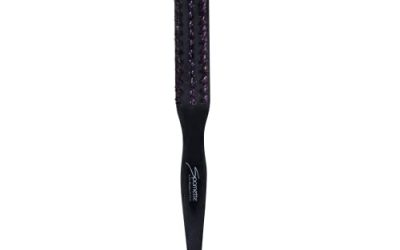
1. Spornette Little Wonder Teasing Brush (Model 111)

Specs
- Bristles: mixed boar and tourmaline-infused nylon
- Slim, narrow brush head for small, targeted sections
- Pointed tail handle doubles as a parting and sectioning pick
- Model 111, offered in several handle colors
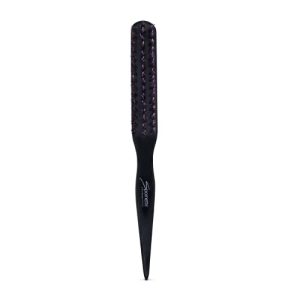
The Little Wonder is the brush generations of stylists learned on, and it remains the benchmark for targeted work. The narrow head fits into a single lifted section without disturbing its neighbors, and the crimped mixed bristles grip quickly, so the cushion forms in a few short strokes instead of a dozen. That efficiency matters: fewer strokes means less cuticle wear. It is the pick for crown lift, padding an updo, and smoothing the top layer afterward with the same tool. On very thick hair the small head can feel slow for all-over volume, but for precision it is hard to beat.
2. Cricket Amped Up Teasing Brush

Specs
- Boar and nylon bristles in staggered, multi-level rows
- Ergonomic handle with a built-in sectioning tip
- Heat resistant, safe to use alongside hot tools
- Compact head sized for root work and updos
The Amped Up takes a different approach to grip: instead of one uniform row, its bristles sit at staggered heights, so each stroke catches hair at several levels and packs the cushion down in fewer passes. The handle is shaped for control during the short, firm strokes teasing requires, and the sectioning tip at the end lifts clean layers. Because it is heat resistant, you can set a teased section with a dryer or iron nearby without worrying about the brush. It suits medium to thick hair especially well; on very fine hair, use a lighter hand, because the multi-level layout grips aggressively.
3. Conair Slim Teasing Hair Brush

Specs
- Mixed boar bristles
- Alternating high and low bristle rows to lift and lock in fullness
- Pointed tail for precise parting and sectioning
- Slim profile made for updos and spot lift
Conair’s version is the widely available drugstore staple, and its alternating row heights are the reason it works: the taller rows push hair down into the cushion while the shorter rows hold it there, so the tease stays put instead of springing back. The boar bristles also spread a little natural oil during the smoothing pass, which helps the top layer look polished rather than fuzzy. It is a sensible first teasing brush if you are not sure the style suits you, and its slim shape tucks into a kit easily. The trade-off is finesse; the bristle finish is less refined than the salon picks above.
4. Phillips Brush Teaze Ultimate Teasing Brush

Specs
- Concave bristle face shaped to follow the curve of the head
- Mixed boar and tipped nylon bristles for penetration and lift
- Lightweight wooden handle, about 9.25 inches long
- Wider head for finishing passes over larger sections
The Teaze is built around a simple idea: a concave brush face meets the head evenly, so one pass smooths and shapes a whole section instead of a narrow strip. The mixed boar and tipped nylon bristles penetrate to the roots for lift, then the same brush glides over the top to finish. The wooden handle keeps it light during longer styling sessions. Choose this one if you tease larger areas, such as the full crown of a voluminous blowout style, rather than small padded sections. Its width makes it less precise for tight updo work than the slim picks.
5. GranNaturals Boar and Nylon Teasing Brush

Specs
- Mixed boar and nylon bristles in a slim layout
- Wooden rat tail handle with a pick end for sectioning
- Designed for backcombing, smoothing, and edge control
- Narrow head suited to fine and thin hair sections
GranNaturals pairs the classic slim silhouette with a wooden rat tail handle, and the combination is aimed squarely at smaller sections and detail work: backcombing at the roots, smoothing a slicked style, and tidying edges with the same tool. The mixed bristles give enough grip to build a cushion without the harsh drag of an all-nylon brush, which makes it a reasonable option for finer hair used gently. As with every brush here, gentle is the operative word on thin strands: build the cushion in two or three strokes, stop, and smooth.
Teasing and Removal Notes
Technique protects hair more than any product claim. Work on dry hair, lift a section no wider than the brush head, hold it straight up, and push the brush down toward the scalp in two or three short strokes. Repeat section by section, then smooth only the visible top layer with light passes, never pushing the smoothing strokes into the cushion you built.
Removal is where the damage usually happens, so slow down. Before a brush touches teased hair, work conditioner through the tangled sections with your fingers, starting at the ends and easing upward in small increments. Then use a wide, gentle brush, still working from the ends up, and only move to washing once the cushion has released. Never rip a brush through a teased section from the top down; that is how a styling choice turns into breakage. If your hair is fine, color-treated, or already fragile, keep teasing for occasions, keep the cushion loose, and let root product and heat share the workload.
FAQ
Is backcombing always damaging?
It always costs something, because the volume comes from roughing strands against each other. Done occasionally with few strokes and removed patiently with conditioner, the cost stays modest for most hair. Done daily and ripped out, it breaks hair. The habit matters more than the single session.
Which teasing brush is gentlest for fine hair?
A slim mixed-bristle brush with softer boar tufts, such as the GranNaturals or the Spornette Little Wonder used lightly. Build less cushion than you think you need, and support it with root product so the brush does less work.
Why does my teased volume fall flat so fast?
Usually the hair was limp to start with, the sections were too large, or the smoothing pass pushed into the cushion. Tease smaller sections on dry hair, add a volumizing product at the roots first, and smooth only the surface.
Can I tease wet hair?
No. Wet hair stretches and snaps far more easily, and a tease built on wet hair sets into a worse tangle. Tease dry hair only, and remove the tease before washing rather than shampooing a tangled cushion.
How do I clean a teasing brush?
Lift trapped hair out with the tail end of another brush or a comb after each use, and wash the bristles occasionally with warm water and a little shampoo. Let the brush dry bristle-side down on a towel.
Conclusion
For most people, the Spornette Little Wonder is the right first and last teasing brush: precise, efficient, and gentle enough when used with restraint. The Cricket Amped Up builds volume fastest, the Conair is the easy drugstore option, the Phillips Teaze covers large sections comfortably, and the GranNaturals suits detail work on finer hair. Whichever you choose, treat backcombing as an occasional style, keep the strokes few, and let conditioner and patience do the removal. The volume is the fun part; the brush-out is where you decide what it costs.