Last updated: October 22, 2026
- Quick Comparison of Earring Back Types
- Best Overall: Rigid Lifter Backs
- Best for Security: Screw-On Locking Backs
- Best Everyday Secure Fit: Locking Clutch Backs
- Best for Stretched or Thin Lobes: Lobe Wonder Patches
- Best for Comfort: Large Silicone Locking Backs
- How to Choose by Earring Weight
- What to Look For
- Frequently Asked Questions
The best earring backs for heavy earrings are rigid lifter backs (also called lobe lifters or support backs), secure locking backs such as screw-on or clutch locking styles, and adhesive earlobe support patches like Lobe Wonder. Heavy earrings pull the post down and stretch the piercing over time, so a back that spreads the weight or supports the lobe matters more than the earring itself.
This guide compares five types of earring backs, explains which suits which weight and ear, and gives a simple weight-based decision chart. It is general information; if you have a torn or painful lobe, see a medical professional.

Chrysmela Catch Platinum Locking Earring Backs with Lift Support Disc | Chrysmela Catch Platinum Locking Earring Backs
Included for 'Best Earring Backs for Heavy Earrings in 2026' because the listing specifies Chrysmela Catch Platinum Locking Earring Backs, details this guide uses to compare options.
View on Amazon
Chrysmela Catch Yellow Gold Earring Lifter Backs for Diamond Studs, for Diamond Studs and Pearls
Included for 'Best Earring Backs for Heavy Earrings in 2026' because the listing specifies for Diamond Studs and Pearls, details this guide uses to compare options.
View on Amazon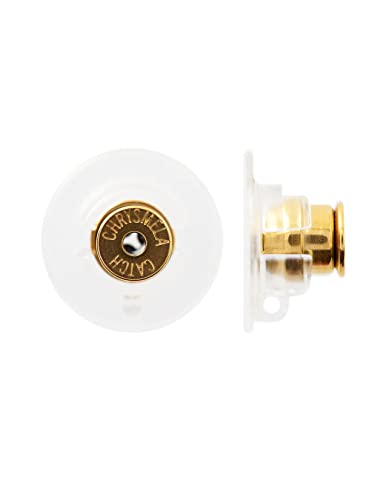
Chrysmela Catch Yellow Gold Earring Lifter Backs for Diamond Studs, Pearls | Chrysmela Yellow Gold Earring Locks, Protect Your Diamond Earring
Included for 'Best Earring Backs for Heavy Earrings in 2026' because the listing specifies Pearls and Chrysmela Yellow Gold Earring Locks, details this guide uses to compare options.
View on Amazon
Chrysmela Catch Rose Gold Locking Earring Backs with Lift Support Disc | Chrysmela Catch Rose Gold Locking Earring Backs, Protect Your Diamond Earrings
Included for 'Best Earring Backs for Heavy Earrings in 2026' because the listing specifies Chrysmela Catch Rose Gold Locking Earring Backs and Protect Your Diamond Earrings, details this guide uses to compare options.
View on AmazonQuick Comparison of Earring Back Types
| Type | Best for | How it helps | Typical pack | Price tier |
|---|---|---|---|---|
| Rigid lifter backs (lobe lifters) | Droopy lobes, medium to heavy studs | Wider flat plate spreads weight and keeps the earring upright | 3 to 12 pieces | Budget |
| Screw-on locking backs | Heavy studs and gemstones | Threaded back holds firmly with no slipping | 1 to 6 pairs | Mid-range |
| Locking clutch backs | Everyday secure fit | Tight fit, locks in place | Several pairs | Budget to mid-range |
| Lobe Wonder support patches | Stretched or thin lobes | Adhesive patch supports the lobe from behind | Packs of 60 to 240 patches | Budget |
| Large silicone locking backs | Comfort, sleeping, arthritic hands | Soft, grippy, easy to handle | Several pairs | Budget |
Pack sizes vary by listing. Descriptions reflect how each type is generally designed; check the product page for materials and size.
Best Overall: Rigid Lifter Backs
Lifter backs have a wide, flat or shaped plate behind the lobe. They distribute the weight and help the earring sit upright instead of drooping forward. They come in shapes such as flower, crown, arch and flat disc, and in metals and acrylic. They suit people whose heavy studs lean or flip forward. Some designs sit bulkier behind the ear, so choose a flat version for hair-up looks.
Best for Security: Screw-On Locking Backs
Threaded backs screw onto a threaded post and stay put under heavy gemstones and statement studs. They are the pick when you worry about losing an expensive earring. They only work with threaded posts, and they take a little time to put on.
Best Everyday Secure Fit: Locking Clutch Backs
A locking clutch back grips the post more tightly than a standard butterfly back. It is a simple upgrade for medium-weight earrings that sometimes slip off. It does not reduce weight on the lobe, though, so it is less suited to very heavy pieces.
Best for Stretched or Thin Lobes: Lobe Wonder Patches
Lobe Wonder is an adhesive patch you stick on the back of the earlobe, then push the earring through the patch and piercing. It supports the lobe and helps prevent tearing and drooping. Packs usually contain dozens to hundreds of patches. They are single-use and can leave the skin slightly irritated if you are sensitive to adhesives. Similar memory-foam patch products also exist.
Best for Comfort: Large Silicone Locking Backs
Soft, large silicone backs are comfortable for long wear and are easy to grip, which helps people with arthritic hands. They are often sold as hypoallergenic, though you should confirm the material. They can be too stretchy for very heavy earrings, so pair them with lighter pieces.
How to Choose by Earring Weight
| Earring weight | Suggested back | Notes |
|---|---|---|
| Under 3 g | Standard or locking clutch | No extra support usually needed |
| 3 to 6 g | Lifter or locking back | Helps stop tilting |
| 6 to 10 g | Lifter plus screw-on lock, or support patch | Limit wear to a few hours |
| Over 10 g | Support patch with lifter back | Consider hook or ear-cuff alternatives |
These weight ranges are rough guidelines for planning, not medical limits. How much your ears tolerate depends on lobe thickness and piercing size.
What to Look For
Material
Choose backs made from the same safe metal as the post. If you have sensitive ears, look for titanium, niobium or solid gold, as covered in our sensitive-ear earring guidance.
Post compatibility
Standard posts are about 0.8 mm (20 gauge) or 1.0 mm (18 gauge). A back that is too loose will slip; one that is too tight can damage the post. Check the hole size of the back before buying a multipack.
Size and visibility
A larger plate supports more weight but may show through thin hair or ride up against the neck. Choose a small lifter if appearance matters.
Cost per pair
A pack of 12 lifters for the price of a single pair of locking backs could mean six pairs at a lower cost each. Buy a mixed pack to test which style you prefer.
Wear and care habits
- Remove heavy earrings at the end of the evening.
- Rotate pairs to give the lobe rest.
- Do not sleep in heavy earrings.
- Check backs for wear; a bent lifter or loose clutch should be replaced.
Stretched piercings do not return to their original size without professional help. If a lobe is torn, painful or infected, speak to a doctor.
Frequently Asked Questions
What are earring lifters?
Earring lifters, also called lobe lifters, are rigid backs with a wide plate that supports the earlobe and keeps the earring upright.
Do Lobe Wonder patches work?
They are designed to support the lobe and reduce stretching or tearing. Many wearers find them useful for heavy earrings, though they are single-use and effects vary by lobe type.
Why do my heavy earrings keep drooping forward?
The weight of the front pulls the post down, and a standard back cannot counter it. A lifter back or support patch evens out the weight.
Can I use locking backs with any earring?
No. Screw-on backs need threaded posts, and some locking clutches only fit standard post diameters. Check compatibility before buying.
How long can I wear heavy earrings?
A few hours at a time is generally gentler on the lobes than all-day wear. If you feel pain or pulling, take them off.