Last updated: November 23, 2026
Disclosure: As an Amazon Associate, I earn from qualifying purchases.
Winter is hard on body skin in a way summer never is. Cold outdoor air holds very little moisture, indoor heating dries the air out further, and long hot showers strip away the oils your skin was relying on. The result is familiar: flaky shins, itchy backs, rough elbows and hands that feel tight minutes after washing. A light lotion that worked fine in July often disappears within an hour in January.
The fix is partly the formula — winter calls for richer lotions built on humectants and occlusives rather than watery gels — and partly the habit. Honestly, the habit matters more: lotion smoothed onto damp skin right after a shower does more than an expensive product applied to bone-dry skin later. Below is how to choose a winter body lotion, five strong options with different strengths, and the usage habits that make any of them work better. One boundary up front: these are moisturizers, not medicine. No body lotion treats eczema, and skin that is cracked, weeping or infected needs a clinician, not a richer lotion.
How to Choose a Body Lotion for Winter
Look for humectants plus occlusives. Glycerin, sorbitol and hyaluronic acid pull water into the outer skin layer, but in dry winter air that water evaporates quickly unless something seals it in. Petrolatum, mineral oil, dimethicone and shea butter form that seal. A good winter lotion combines both sides; a lotion that is mostly water and fragrance will not hold up.
Go fragrance free. Fragrance is one of the most common irritants on already stressed skin, and winter skin — covered in micro-cracks from dryness — is easier to irritate. Every pick below is fragrance free, which also makes them safer choices for sensitive skin and for layering under scented products.
Check the exfoliating extras. Flaky buildup on shins and arms sometimes needs more than moisture. Lotions with alpha hydroxy acids or urea gently loosen dead skin so the moisturizers underneath can reach living skin. The trade-off: acids can sting on cracked or freshly shaved skin, so treat them as a few-times-a-week option if you are very reactive.
Buy the big pump bottle. Winter moisturizing only works if it is daily and full-body, and that uses a surprising amount of product. A large pump bottle by the shower removes friction — no caps to unscrew with wet hands, no running out in week two.
Know when a lotion is not enough. Lotions are the lightest of the three classic formats. If your skin is very dry, a cream will usually outlast a lotion, and an ointment outlasts both on targeted spots like heels and knuckles. Several picks below sit at the rich end of the lotion category, but there is no shame in stepping up a format mid-winter.
The 5 Best Body Lotions for Winter
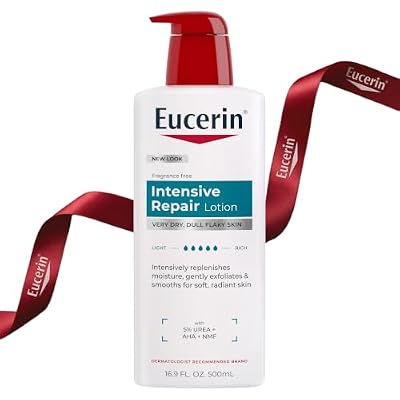
Eucerin Intensive Repair Lotion
Specs
- Size: 16.9 fl oz pump bottle
- Key ingredients: Alpha hydroxy acids, glycerin, mineral oil
- Fragrance free and paraben free
- Positioned for very dry, flaky skin
This is the heavy lifter of the group. Eucerin pairs a rich emollient base with alpha hydroxy acids, so it moisturizes and gently exfoliates at the same time — a genuinely useful combination for the flaky, rough texture winter leaves on shins and forearms. The texture is noticeably richer than a standard lotion and takes a little longer to sink in, which in mid-winter is a feature rather than a flaw. Because of the acids, skip it on cracked skin or right after shaving, where it can sting; for intact but scaly skin a few evenings a week, it smooths texture in a way plain moisturizers cannot.
Vanicream Moisturizing Lotion

Specs
- Size: 16 fl oz (473 ml) pump bottle
- Key ingredients: White petrolatum, glycerin, sorbitol
- Fragrance free, dye free, lanolin free, paraben free, gluten free
- Non-comedogenic; formulated for sensitive skin
Vanicream is the pick for people whose skin objects to almost everything. The formula is deliberately short: petrolatum for the occlusive seal, humectants to draw in water, and none of the common irritants — no fragrance, dyes, lanolin, parabens or formaldehyde releasers. It is lighter than the Eucerin and absorbs cleanly, so it works as an everyday, whole-body default, including on the face if you are simplifying a routine. In the coldest weeks, very dry types may find it needs a second layer on shins and hands, but as a non-irritating base lotion for reactive winter skin, it is hard to beat.
La Roche-Posay Lipikar Daily Repair Moisturizing Lotion

Specs
- Size: 13.52 fl oz (400 ml) pump bottle
- Key ingredients: Shea butter, glycerin, niacinamide, prebiotic thermal water
- Fragrance free
- For normal to dry, sensitive skin; face and body
Lipikar sits between the two picks above: richer than Vanicream thanks to shea butter, but without exfoliating acids, so it suits daily use on skin that is dry and sensitive at once. Niacinamide is a thoughtful addition for winter, supporting the skin barrier that cold air and heating keep undermining. The texture is a true lotion — it spreads easily over large areas and absorbs faster than its ingredient list suggests — which makes it a realistic twice-a-day product rather than a once-a-week treatment. The bottle is slightly smaller than the others here, the only real trade-off.
Lubriderm Advanced Therapy Lotion

Specs
- Size: 16 fl oz pump bottle
- Key ingredients: Pro-Ceramide, glycerin, panthenol (pro-vitamin B5), vitamin E
- Fragrance free and hypoallergenic
- Non-greasy formula for itchy, extra dry skin
Lubriderm’s Advanced Therapy line is aimed squarely at the itch that comes with winter dryness, and its selling point is texture: it delivers a ceramide-and-glycerin formula in a lotion that genuinely absorbs without a greasy film, so you can dress straight after applying. That matters more than it sounds — the best winter lotion is the one you will actually use every morning, and greasy residue is the main reason people quit. Panthenol and vitamin E round out a formula designed for daily, full-body maintenance of extra dry skin rather than rescue treatment of damaged skin.
Aveeno Daily Moisturizing Lotion

Specs
- Size: 18 fl oz pump bottle
- Key ingredients: Prebiotic colloidal oat, glycerin, dimethicone
- Fragrance free and paraben free
- Non-greasy, non-comedogenic
Aveeno’s classic lotion is built on colloidal oatmeal, an ingredient with a long track record for calming dry, itchy-feeling skin, backed by dimethicone to help seal in moisture. It is the lightest-feeling pick here and the largest bottle, which makes it a sensible household default — the lotion that lives by the sink and the shower for everyday top-ups. For severely dry or flaking winter skin it may not be rich enough as the only product, but layered over damp skin morning and night it keeps normal-to-dry skin comfortable through the season, and it layers well under a heavier cream on problem areas.
Usage Notes
Timing beats quantity. Apply lotion within a few minutes of stepping out of the shower, while skin is still damp — this traps the water already on your skin instead of asking the lotion to supply all of it. Keep showers lukewarm rather than hot, and pat dry instead of rubbing.
Hands need their own routine in winter: reapply after every hand wash, and keep a tube where you will actually use it. For heels, knuckles and elbows that stay rough despite daily lotion, layer a plain petrolatum ointment over the lotion at night; the lotion hydrates and the ointment seals. Finally, give any new lotion two consistent weeks before judging it — barrier repair is gradual, and most winter dryness is a habit problem, not a product problem.
FAQ
What makes a body lotion good for winter specifically?
Winter air, indoor heating and hot showers all pull moisture from skin faster than in other seasons, so a winter lotion needs more occlusive ingredients — petrolatum, mineral oil, dimethicone or shea butter — to slow water loss, plus humectants like glycerin underneath. Light summer gels usually lack that sealing layer.
Should I apply body lotion on damp or dry skin?
Damp skin, ideally within a few minutes of showering. Water left on the skin gives humectants something to hold onto, and the occlusive layer then traps it. Applying to completely dry skin still helps, but noticeably less.
Is a lotion enough for very dry winter skin, or do I need a cream?
For moderately dry skin, a rich lotion used daily on damp skin is usually enough. For very dry, rough or flaking skin, a cream will generally outlast a lotion, and an ointment is strongest of all on small areas like heels and knuckles. Moving up a format is a normal mid-winter adjustment, not a failure of the lotion.
Can a body lotion treat eczema?
No. Lotions can moisturize and reduce the dryness and itch that come with eczema-prone skin, and fragrance-free formulas are usually recommended for daily care, but they do not treat the condition itself. Cracked, weeping, oozing or possibly infected skin should be assessed by a clinician.
How often should I reapply body lotion in winter?
Once a day after showering is the baseline for full-body application, with a second round at night if skin still feels tight. Hands and other frequently washed areas benefit from reapplication after each wash. Consistency over weeks matters more than applying large amounts occasionally.
Conclusion
The best body lotion for winter is a rich, fragrance-free formula you will use every single day. Choose Eucerin Intensive Repair if flakes and roughness are your main problem, Vanicream if your skin reacts to everything, Lipikar for a balanced daily lotion with shea butter and niacinamide, Lubriderm Advanced Therapy if you hate greasy residue, and Aveeno as the big-bottle household staple. Pair any of them with the damp-skin habit and lukewarm showers, and step up to a cream or ointment on the spots that still struggle — that combination, not any single product, is what gets skin through winter.